Algoritmo ni Grover
Para sa Qiskit in Classrooms module na ito, kailangan ng mga estudyante ng isang gumaganang Python environment na may mga sumusunod na naka-install na package:
qiskitv2.1.0 o mas bagoqiskit-ibm-runtimev0.40.1 o mas bagoqiskit-aerv0.17.0 o mas bagoqiskit.visualizationnumpypylatexenc
Para i-set up at i-install ang mga package sa itaas, tingnan ang gabay na I-install ang Qiskit. Para makapagpatakbo ng mga trabaho sa tunay na mga quantum computer, kailangan ng mga estudyante na mag-set up ng account sa IBM Quantum® sa pamamagitan ng pagsunod sa mga hakbang sa gabay na I-set up ang iyong IBM Cloud account.
Ang module na ito ay nasubok at gumamit ng 12 segundo ng QPU time. Ito ay isang mabuting-loob na pagtatantya; ang iyong aktwal na paggamit ay maaaring mag-iba.
# Added by doQumentation — installs the packages this notebook needs if they are missing
import importlib.util

_needed = {"qiskit": "qiskit", "qiskit_ibm_runtime": "qiskit-ibm-runtime"}
_missing = [pip for module, pip in _needed.items()
            if importlib.util.find_spec(module) is None]
# One at a time, so a package that fails to install does not block the others
for _pip in _missing:
    %pip install -q {_pip}
if not _missing:
    print("\u2713 All required packages are installed")
# Uncomment and modify this line as needed to install dependencies
#!pip install 'qiskit>=2.1.0' 'qiskit-ibm-runtime>=0.40.1' 'qiskit-aer>=0.17.0' 'numpy' 'pylatexenc'
Panimula
Ang algoritmo ni Grover ay isang pangunahing quantum algorithm na tumutugon sa problema ng hindi nakaayos na paghahanap: kapag may isang hanay ng na mga aytem at isang paraan para suriin kung ang isang partikular na aytem ang hinahanap mo, gaano kabilis mo mahahanap ang nais na aytem? Sa klasikal na computing, kung ang data ay hindi nakaayos at walang istraktura na magagamit, ang pinakamainam na diskarte ay ang suriin ang bawat aytem nang isa-isa, na humahantong sa query complexity na — sa karaniwan, kailangan mong suriin ang halos kalahati ng mga aytem bago mahanap ang target.
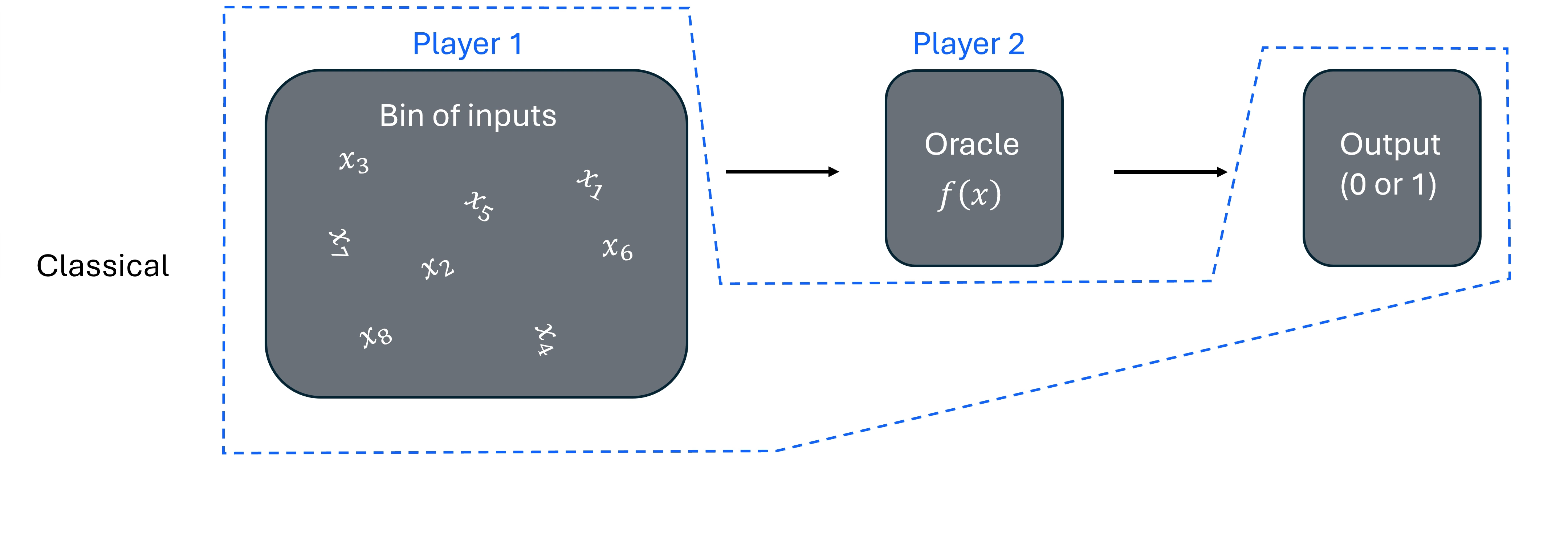
Ang algoritmo ni Grover, na ipinakilala ni Lov Grover noong 1996, ay nagpapakita kung paano malulutas ng isang quantum computer ang problemang ito nang mas mahusay, na nangangailangan lamang ng na mga hakbang para mahanap ang minarkahang aytem nang may mataas na posibilidad. Kumakatawan ito sa isang quadratic speedup kumpara sa mga klasikal na pamamaraan, na mahalaga para sa malalaking dataset.
Ang algoritmo ay gumagana sa sumusunod na konteksto:
- Setup ng problema: Mayroon kang isang function na na nagbabalik ng 1 kung ang ang aytem na hinahanap mo, at 0 kung hindi. Ang function na ito ay madalas na tinatawag na oracle o black box, dahil ang tanging paraan mo para malaman ang tungkol sa data ay sa pamamagitan ng pagtatanong kay .
- Pagiging kapaki-pakinabang ng quantum: Habang ang mga klasikal na algorithm para sa problemang ito ay nangangailangan, sa karaniwan, ng na mga query, ang algoritmo ni Grover ay makakahanap ng solusyon sa humigit-kumulang na mga query, na mas mabilis para sa malaking .
- Kung paano ito gumagana (sa mataas na antas):
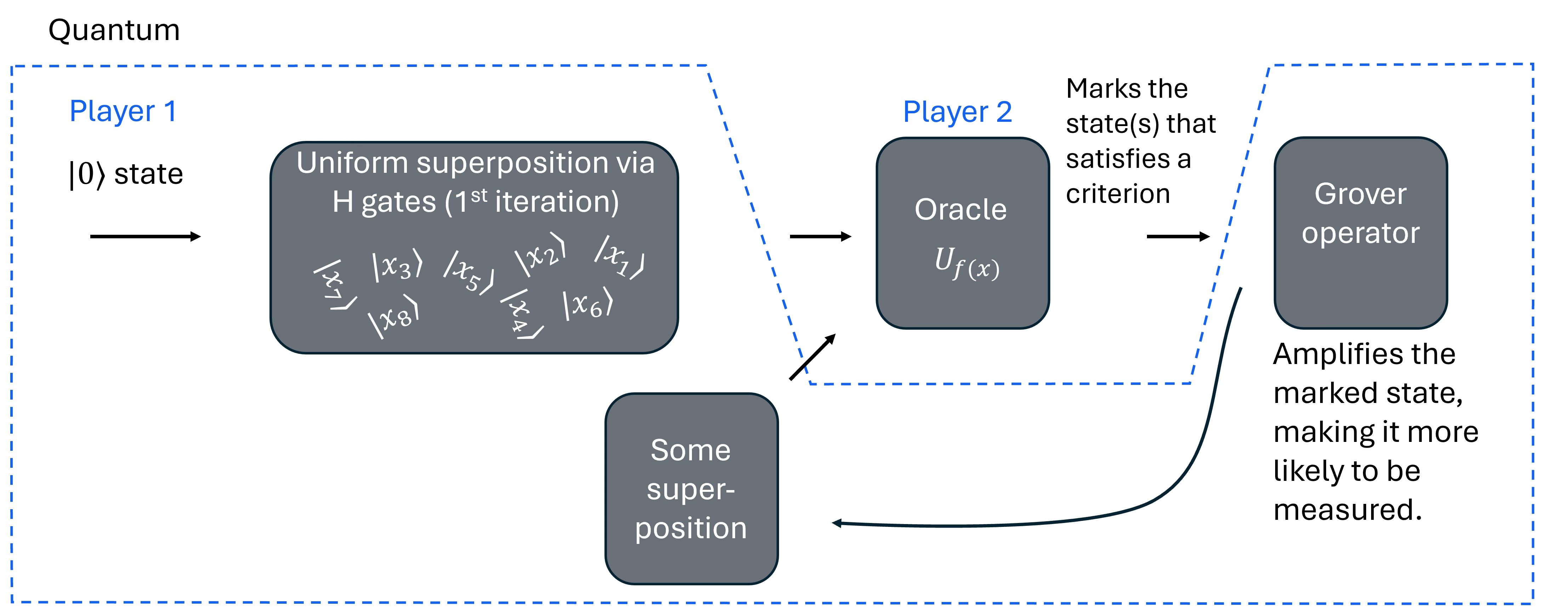
- Una, nilikha ng quantum computer ang isang superposition ng lahat ng posibleng estado, na kumakatawan sa lahat ng posibleng aytem nang sabay-sabay.
- Pagkatapos, paulit-ulit nitong inilalapat ang isang serye ng mga quantum operation (ang Grover iteration) na nagpapalaki ng posibilidad ng tamang sagot at nagpapaliit sa iba.
- Pagkatapos ng sapat na mga ulit, ang pagsukat ng quantum state ay nagbubunga ng tamang sagot nang may mataas na posibilidad.
Narito ang isang napaka-simpleng diagram ng algoritmo ni Grover na lumalaktaw sa maraming detalye. Para sa mas detalyadong diagram, tingnan ang paper na ito.
Ilang mga bagay na dapat pansinin tungkol sa algoritmo ni Grover:
- Ito ay pinakamainam para sa hindi nakaayos na paghahanap: walang quantum algorithm ang makakalutas ng problema nang may mas kaunti pang na mga query.
- Nagbibigay lamang ito ng quadratic, hindi exponential, speedup — hindi katulad ng ilang ibang quantum algorithm (halimbawa, ang algoritmo ni Shor para sa factoring).
- Mayroon itong mga praktikal na implikasyon, tulad ng posibilidad na mapabilis ang mga brute-force na pag-atake sa mga cryptographic system, kahit ang speedup ay hindi sapat para sirain ang karamihan ng modernong encryption sa sarili nitong lakas.
Para sa mga undergraduate na estudyante na pamilyar sa mga pangunahing konsepto ng computing at mga query model, ang algoritmo ni Grover ay nagbibigay ng malinaw na ilustrasyon kung paano maaaring mahigitan ng quantum computing ang mga klasikal na diskarte para sa ilang partikular na problema, kahit ang pagpapabuti ay "tanging" quadratic lamang. Nagsisilbi rin itong daan para maunawaan ang mas advanced na mga quantum algorithm at ang mas malawak na potensyal ng quantum computing.
Ang amplitude amplification ay isang pangkalahatang layunin na quantum algorithm, o subroutine, na maaaring gamitin para makakuha ng quadratic speedup kumpara sa iilang klasikal na algorithm. Ang algoritmo ni Grover ang una na nagpakita ng speedup na ito sa mga problema ng hindi nakaayos na paghahanap. Ang pagbuo ng isang Grover search problem ay nangangailangan ng isang oracle function na nagmamarka ng isa o higit pang mga computational basis state bilang mga estado na nais naming hanapin, at isang amplification circuit na nagpapalaki ng amplitude ng mga minarkahang estado, na nagpipigil sa natitirang mga estado.
Dito, ipinapakita namin kung paano bumuo ng mga Grover oracle at gamitin ang GroverOperator mula sa Qiskit circuit library para madaling mag-set up ng isang Grover search instance. Ang IBM Quantum Sampler primitive ay nagbibigay-daan sa maayos na pagpapatupad ng mga Grover circuit.
Teorya
Ipagpalagay na mayroon itong function na na nagmamapa ng mga binary string sa isang solong binary variable, ibig sabihin
Isang halimbawa na tinukoy sa ay
Isa pang halimbawa na tinukoy sa ay
Ang iyong gawain ay hanapin ang mga quantum state na tumutugma sa mga argumento ng na nakamap sa 1. Sa ibang salita, hanapin ang lahat ng na kung saan ang (o kung walang solusyon, iulat iyon). Ang mga hindi solusyon ay tinutukoy namin bilang . Siyempre, gagawin natin ito sa isang quantum computer, gamit ang mga quantum state, kaya kapaki-pakinabang na ipahayag ang mga binary string na ito bilang mga estado:
Gamit ang notasyong quantum state (Dirac), naghahanap tayo ng isa o higit pang espesyal na estado sa isang hanay ng na posibleng estado, kung saan ang ay ang bilang ng mga qubit, at ang mga hindi solusyon ay tinutukoy ng .
Maaari nating isipin ang function na bilang ibinibigay ng isang oracle: isang black-box na maaari nating i-query para matukoy ang epekto nito sa isang estado . Sa praktis, madalas nating malalaman ang function, ngunit maaaring napakakomplikadong ipatupad, na nangangahulugang ang pagbabawas ng bilang ng mga query o aplikasyon ng ay maaaring mahalaga. Bilang kahalili, maaari nating isipin ang isang paradigma kung saan ang isang tao ay nagtatanong sa isang oracle na kinokontrol ng isa pang tao, upang hindi natin alam ang oracle function, alam lang natin ang epekto nito sa partikular na mga estado mula sa pag-query.
Ito ay isang "problema ng hindi nakaayos na paghahanap", dahil walang espesyal sa na tumutulong sa atin sa ating paghahanap. Ang mga output ay hindi nakaayos at ang mga solusyon ay hindi alam na magkakasamang makikita, at iba pa. Isaalang-alang ang paggamit ng lumang, papel na phone book bilang analohiya. Ang hindi nakaayos na paghahanap na ito ay katulad ng pag-scan nito para hanapin ang isang partikular na numero, at hindi katulad ng paghahanap sa pamamagitan ng isang nakaayos na listahan ng mga pangalan.
Sa kaso kung saan isang solusyon ang hinahanap, klasikal na, nangangailangan ito ng bilang ng mga query na linear sa . Malinaw na maaari mong mahanap ang isang solusyon sa unang pagsubok, o maaaring wala kang mahanap na solusyon sa unang na hula, upang kailangan mong i-query ang na input para makita kung mayroon bang anumang solusyon. Dahil ang mga function ay walang magagamit na istraktura, kakailanganin mo ng na mga hula sa karaniwan. Ang algoritmo ni Grover ay nangangailangan ng bilang ng mga query o computations ng na lumalaki tulad ng .
Buod ng mga circuit sa Algoritmo ni Grover
Ang isang kumpletong mathematical na walkthrough ng algoritmo ni Grover ay matatagpuan, halimbawa, sa Mga Pangunahing Kaalaman ng Quantum Algorithms, isang kurso ni John Watrous sa IBM Quantum Learning. Isang pinaikling pagtrato ang ibinibigay sa isang apendiks sa dulo ng module na ito. Ngunit sa ngayon, susuriin lamang natin ang pangkalahatang istraktura ng quantum circuit na nagpapatupad ng algoritmo ni Grover.
Ang algoritmo ni Grover ay maaaring hatiin sa mga sumusunod na yugto:
- Paghahanda ng isang paunang superposition (pag-apply ng mga Hadamard gate sa lahat ng qubit)
- "Pagmamarka" sa target na estado/s na may phase flip
- Isang "diffusion" na yugto kung saan ang mga Hadamard gate at isang phase flip ay inilalapat sa lahat ng qubit.
- Posibleng mga paulit-ulit na pagmamarka at diffusion na yugto para mapakinabangan ang posibilidad ng pagsukat sa target na estado
- Pagsukat
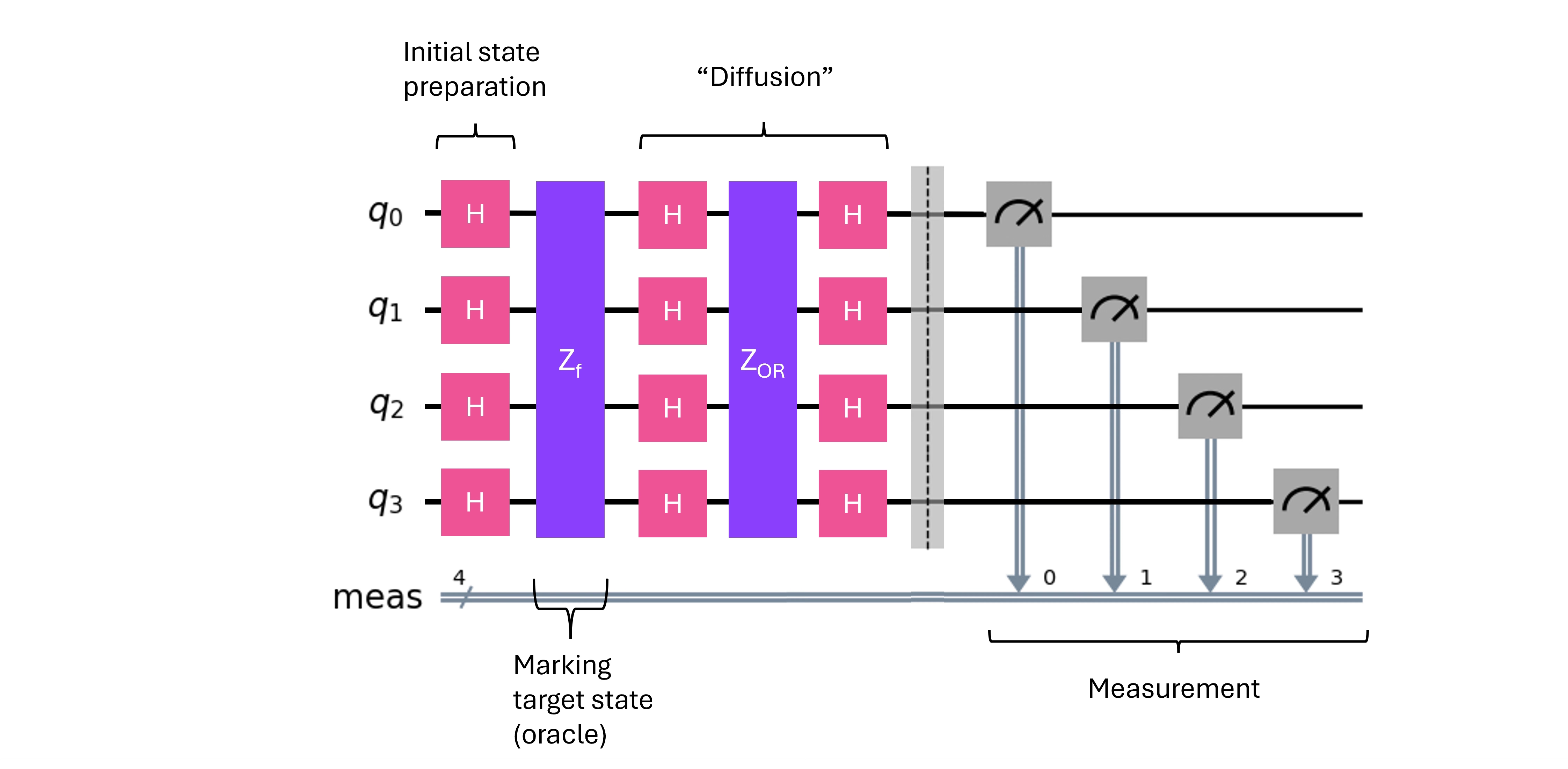 Often, the marking gate and the diffusion layers consisting of , , and are collectively referred to as the "Grover operator". In this diagram, only a single repetition of the Grover operator is shown.
Ang mga Hadamard gate na ay kilala at malawakang ginagamit sa buong quantum computing. Ang Hadamard gate ay lumilikha ng mga superposition state. Partikular, ito ay tinukoy ng
Ang operasyon nito sa anumang ibang estado ay tinukoy sa pamamagitan ng linearity. Partikular na, ang isang layer ng mga Hadamard gate ay nagbibigay-daan sa atin na lumipat mula sa paunang estado na ang lahat ng qubit ay nasa (tinutukoy na ) patungo sa isang estado kung saan ang bawat qubit ay may ilang posibilidad na masukat sa alinman sa o ; pinapayagan nito tayong sondahin ang espasyo ng lahat ng posibleng estado nang naiiba kaysa sa klasikal na computing.
Isang mahalagang corollary na katangian ng Hadamard gate ay ang pag-aplay ng pangalawang beses ay maaaring i-undo ang mga ganitong superposition state:
Mahalaga ito sa susunod na sandali.
Suriin ang iyong pag-unawa
Simula sa kahulugan ng Hadamard gate, ipakita na ang pangalawang aplikasyon ng Hadamard gate ay nag-u-undo ng mga ganitong superposition gaya ng sinasabi sa itaas.
Sagot
Kapag inilapat natin ang sa mga estado na at , makukuha natin:
Ang gate ay hindi gaanong karaniwan, at tinukoy ayon sa
Panghuli, ang gate ay tinukoy ng
Pansinin na ang epekto nito ay binabaligtad ng ang tanda ng isang target na estado kung saan ang at iniiwan ang iba pang mga estado nang hindi nababago.
Sa isang napaka-mataas at abstract na antas, maaari mong isipin ang mga hakbang sa circuit sa mga sumusunod na paraan:
- Unang Hadamard layer: inilalagay ang mga qubit sa isang superposition ng lahat ng posibleng estado.
- : minmamarka ang target na estado/s sa pamamagitan ng pagdaragdag ng "-" na tanda sa harap. Hindi agad nito binabago ang mga posibilidad ng pagsukat, ngunit binabago nito kung paano kikilos ang target na estado sa mga kasunod na hakbang.
- Isa pang Hadamard layer: Ang "-" na tanda na ipinakilala sa nakaraang hakbang ay magbabago ng kamag-anak na tanda sa pagitan ng ilang mga term. Dahil ang mga Hadamard gate ay nagpapalit ng isang pinagsamang computational state sa isang computational state, at nagpapalit ng sa , ang pagkakaibang ito ng kamag-anak na tanda ay maaari na ngayong maglaro ng papel sa kung anong mga estado ang nasusukat.
- Isang huling layer ng mga Hadamard gate ang inilalapat, at pagkatapos ay ginagawa ang mga pagsukat. Makikita natin nang mas detalyado kung paano ito gumagana sa susunod na seksyon.
Halimbawa
Para mas maunawaan kung paano gumagana ang algoritmo ni Grover, halina't magtrabaho tayo sa isang maliit na dalawang-qubit na halimbawa. Maaaring ituring itong opsyonal para sa mga hindi nakatuon sa quantum mechanics at Dirac notation. Ngunit para sa mga umaasang magtrabaho nang malaki sa mga quantum computer, lubos itong inirerekomenda.
Narito ang circuit diagram na may mga quantum state na nalagyan ng label sa iba't ibang posisyon sa buong proseso. Pansinin na sa dalawang qubit lamang, mayroon lamang apat na posibleng estado na maaaring masukat sa anumang kalagayan: , , , at .
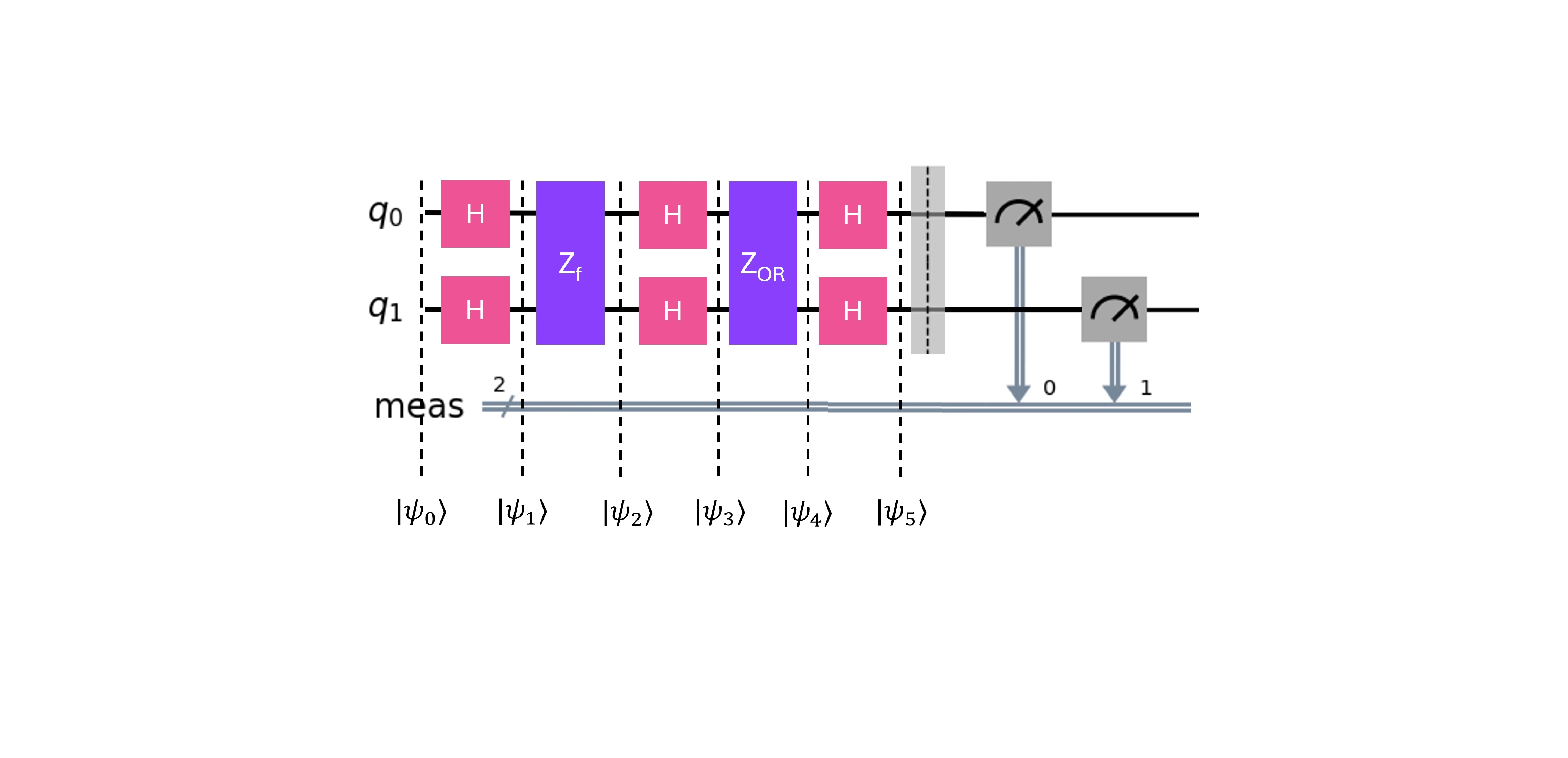
Ipagpalagay nating ang oracle (, hindi alam sa atin) ay nagmamarka ng estado na . Tatrabahuin natin ang mga aksyon ng bawat hanay ng mga quantum gate, kasama ang oracle, at makikita kung anong distribusyon ng mga posibleng estado ang lumalabas sa oras ng pagsukat. Sa pinakasimula, mayroon tayong
Gamit ang kahulugan ng mga Hadamard gate, mayroon tayong
Ngayon ang oracle ay nagmamarka ng target na estado:
Pansinin na sa estadong ito, lahat ng apat na posibleng kinalabasan ay may parehong posibilidad na masukat. Lahat sila ay may bigat na may magnitude na , ibig sabihin bawat isa ay may na tsansa na masukat. Kaya habang ang estado na ay namarkahan sa pamamagitan ng "-" na phase, hindi pa ito nagresulta sa anumang pagtaas ng posibilidad ng pagsukat sa estadong iyon. Nagpapatuloy tayo sa pag-aplay ng susunod na layer ng mga Hadamard gate.
Sa pagsasama ng magkaparehong term, makikita natin
Ngayon ang ay nagbabalik-tanda sa lahat ng estado maliban sa :
At panghuli, inilalapat natin ang huling layer ng mga Hadamard gate:
Sulit na trabahuin ang pagsasama ng mga term na ito para kumbinsihin ang iyong sarili na ang resulta ay talagang:
Iyon ay, ang posibilidad ng pagsukat sa ay 100% (sa kawalan ng ingay at mga error) at ang posibilidad ng pagsukat sa anumang ibang estado ay zero.
Ang dalawang-qubit na halimbawang ito ay isang espesyal na malinis na kaso; ang algoritmo ni Grover ay hindi laging magreresulta sa 100% na tsansa ng pagsukat sa target na estado. Sa halip, pinalalakas nito ang posibilidad ng pagsukat sa target na estado. Gayundin, maaaring kailanganin na ulitin ang Grover operator nang higit sa isang beses.
Sa susunod na seksyon, ilalagay natin ang algorithm na ito sa praktis gamit ang tunay na mga IBM® quantum computer.
Ang geometric na larawan
Ang dalawang-qubit na halimbawa sa itaas ay nagpapakita kung paano gumagana ang algebra para sa isang maliit na kaso, ngunit may mas intuitive na paraan para maunawaan ang algoritmo ni Grover: bilang isang serye ng geometric reflections sa isang dalawang-dimensional na eroplano. Sa ibaba inilalarawan natin ang larawang ito. Maaari mo ring tingnan ang kurso ni John Watrous na Fundamentals of Quantum Algorithms para sa mas maraming detalye.
Pag-set up ng eroplano. Maaari nating hatiin ang paunang superposition state na sa dalawang bahagi. Ang tamang estado — ang hinahanap natin — ay tinatawag nating . Ang bawat ibang estado, pinagsama, ay tinatawag nating . Sa kahulugan, ang at ay ortogonal sa isa't isa, kaya maaari nating i-plot sila bilang mga perpendikular na aksis sa isang abstract, dalawang-dimensional na espasyo. Dahil ang ay isang linear na kombinasyon ng dalawang bahaging ito, ito ay nasa isang maliit na anggulo sa na aksis — malapit sa , dahil sa simula, isang napakaliit na bahagi lamang ng estado ang nasa tamang bahagi na .
Mga reflection. Ang pangunahing mathematical na katotohanan na kailangan natin ay ang isang operator ng form na
ay nagre-reflect ng anumang estado tungkol sa aksis na tinukoy ng . Para makita kung bakit, isaalang-alang ang dalawang kaso: ang isang estado kasabay ng ay hindi nagbabago, at ang isang estado na perpendikular sa ay nababago ang tanda nito. Ang anumang ibang estado ay maaaring hatiin sa dalawang bahaging ito, at ang operator ay kumikilos sa bawat isa nang naaayon — na eksaktong isang reflection tungkol sa .
Lumalabas na ang oracle at ang diffusion step sa algoritmo ni Grover ay maaaring ipahayag bilang mga reflection sa geometric na larawang ito.
Ang oracle bilang reflection. Ang oracle ay nagba-flip ng tanda ng na estado at iniiwan ang lahat ng iba pa. Iyan ay katulad ng isang reflection tungkol sa na aksis.
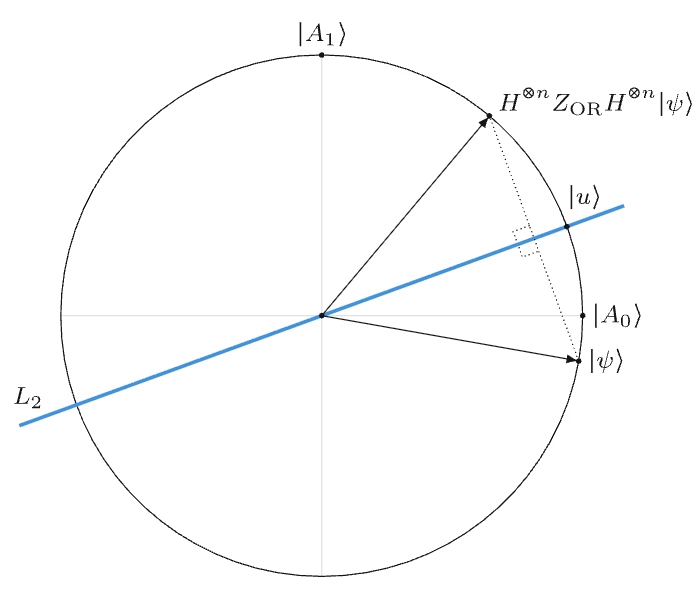
Ang diffusion bilang reflection. Medyo mas mahirap makita kung paano ang diffusion operator ay isang reflection din. Ang diffusion operator ay
Ang nang mag-isa ay isang reflection tungkol sa all-zero state, dahil nagba-flip ito ng tanda ng bawat estado na hindi . Maaaring isulat ito bilang . Ang mga nakapalibot na Hadamard layer ay epektibong nagsasagawa ng pagbabago ng basis, binabago ang aksis ng reflection. Alalahanin na ang ay nagma-map ng sa uniform superposition na . Dahil ang Hadamard ay sarili nitong inverse, ang buong ekspresyon ay nagiging
na isang reflection tungkol sa . Dahil ang ay napakalapit sa (parehong halos kasabay ng ), ang ikalawang reflection na ito ay nagpapadala ng estado sa anggulo na mula sa kinatatayuan nito.
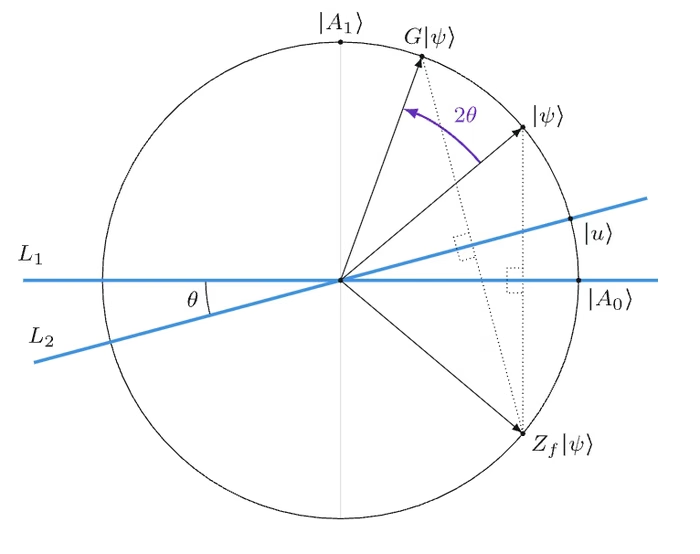
Rotation na . Ang pinagsama-samang epekto ng dalawang reflection na ito ay isang rotation ng patungo sa . Ang bawat sunud-sunod na pag-uulit ng Grover operator ay nag-i-rotate ng estado ng isa pang .
Pinakamainam na bilang ng pag-uulit. Ang aming layunin ay i-rotate ang estado nang kasing lapit sa hangga't maaari, na nangangahulugang mag-rotate ng kabuuang halos radians (isang quarter turn). Kung ang bawat pag-uulit ay nag-aambag ng , ang pinakamainam na bilang ng pag-uulit ay nagtatugon sa
Para sa isang solusyon sa gitna ng na estado, ang paunang anggulo ay (para sa malaking ). Sa pamamagitan ng pag-substitute,
Dito nanggagaling ang sikat na speedup: kailangan lang natin ng na pag-uulit para maabot ang target, sa halip na ang na mga tsek na kakailanganin ng klasikal na paghahanap.
Sa pangkalahatang kaso, kung mayroon na mga solusyon sa gitna ng na kabuuang estado, ang pinakamainam na bilang ng pag-uulit ay
Tandaan na kung mag-a-apply ka ng masyadong maraming pag-uulit, iro-rotate mo ang estado nang lampas sa at ang posibilidad ng paghanap ng iyong target na estado ay magsisimulang bumaba ulit. Mahalaga ang paghanap ng tamang bilang ng pag-uulit, kahit sa maingay na quantum hardware ang eksperimentong pinakamainam na bilang ay maaaring mag-iba sa ideal na formula na ito.
Bakit kapaki-pakinabang ang algoritmo ni Grover?
Sa puntong ito maaari kang magtaka: kaka-build lang natin ng isang oracle na nagmamarka ng target na estado — ngunit para mabuo ito, kailangan nating malaman ang target na estado. Kaya ano talaga ang hinahanap natin?
Ito ay isang makatwirang tanong, at may ilang magagandang sagot.
-
Ang query model ay isang theoretical na kasangkapan. Ang query model ng computation ay hindi dinisenyo para maging direktang praktikal. Ang layunin nito ay magbigay sa atin ng malinis na paraan para suriin ang algorithmic complexity sa pamamagitan ng paghihiwalay ng isang problema sa dalawang bahagi: ang oracle, at lahat ng iba pa. Gaano kahirap ang paghahanap, kung libre ang verification? Paano lumalaki ang bilang ng mga query sa laki ng input? Ang mga ito ay kapaki-pakinabang na mga tanong kahit walang tunay na sistema na gumagana nang eksakto sa ganitong paraan.
-
Maaari mo rin itong isipin bilang isang dalawang-partido na aktibidad: isang tao ang nakaalam ng target na estado at nagtatayo ng oracle; ang trabaho ng isa pang tao ay hanapin ang sagot gamit ang oracle bilang isang black box, nang hindi sumisilip sa loob. Sa Aktibidad 2 sa ibaba, gagawin mo nang eksakto ito kasama ang isang kasosyo.
-
Ang amplitude amplification ay isang malawak na kapaki-pakinabang na subroutine. Kahit tila paikot ang unang demonstrasyong ito, ang pinagbabatayang mekanismo — na tinatawag na amplitude amplification — ay paulit-ulit na lumalabas sa quantum computing. Ang tunay na binubuo natin dito ay intuwisyon para sa isang kasangkapan na lumalabas bilang subroutine sa marami pang mas kumplikadong quantum algorithm.
-
Mayroon mga problema kung saan maaari kang bumuo ng oracle nang hindi alam ang sagot. Ang pangunahing kaalaman ay may isang buong klase ng mga problema kung saan napakahirap hanapin ang isang solusyon, ngunit napakadali suriin na ang isang ibinigay na solusyon ay tama. Ang factoring ay isang halimbawa: kapag may produkto ng dalawang malalaking primo, napakahirap matukoy kung ano ang mga primo na iyon, ngunit kapag nakuha mo na sila, madali mong mami-multiply sila upang ma-verify. (Mayroon kaming mas magandang algorithm kaysa Grover's para sa factoring nang partikular — tingnan ang Shor's algorithm — ngunit ito ay malayo sa nag-iisang problema na may katangiang ito.) Ang Sudoku, constraint satisfaction, at kahit ang klasikong laro ng Minesweeper ay lahat ng mga problema na mahirap lutasin ngunit madaling suriin.
Bakit ito may kaugnayan? Nangangahulugan ito na maaari nating malaman ang lahat ng kondisyon at kinakailangan na dapat matugunan ng isang solusyon, at maaari nating i-encode ang mga kinakailangan na iyon sa isang quantum circuit na nagsisilbing oracle — kahit hindi natin alam ang solusyon mismo. Hahanapin ito ng algoritmo ni Grover para sa atin.
Sa mga ideyang ito sa isip, halina't magtrabaho tayo sa ilang mga halimbawa. Magsisimula tayo sa isang halimbawa kung saan ang solution state ay malinaw na tinukoy upang masundan natin ang lohika ng algorithm. Pagkatapos ay lilipat tayo sa isang dalawang-partido na aktibidad, at sa wakas sa isang halimbawa kung saan ang oracle ay binuo mula sa mga constraint ng problema kaysa mula sa kaalaman ng sagot.
Mga Pangkalahatang Import at Diskarte
Magsisimula tayo sa pag-import ng ilang kinakailangang package.
# Built-in modules
import math

# Imports from Qiskit
from qiskit import QuantumCircuit, QuantumRegister, ClassicalRegister
from qiskit.circuit.library import grover_operator, MCMTGate, ZGate
from qiskit.visualization import plot_distribution
from qiskit.transpiler.preset_passmanagers import generate_preset_pass_manager
Sa buong tutorial na ito at iba pang mga tutorial, gagamit tayo ng isang balangkas para sa quantum computing na kilala bilang "Qiskit patterns", na hinahati ang mga workflow sa mga sumusunod na hakbang:
-
Hakbang 1: I-map ang mga klasikal na input sa isang quantum na problema
-
Hakbang 2: I-optimize ang problema para sa quantum execution
-
Hakbang 3: I-execute gamit ang IBM Quantum primitives
-
Hakbang 4: Post-processing at klasikal na pagsusuri
Karaniwang susundin natin ang mga hakbang na ito, kahit hindi natin palaging tahasang lalagyan ng label ang mga ito.
Aktibidad 1: Hanapin ang isang partikular na target na estado
Hakbang 1: I-map ang mga klasikal na input sa isang quantum na problema
Kailangan ng phase query gate na maglagay ng pangkalahatang phase (-1) sa mga solusyong estado, at huwag baguhin ang mga hindi solusyon. Sa madaling salita, ang Grover's algorithm ay nangangailangan ng isang oracle na nagtatakda ng isa o higit pang markadong computational basis na estado, kung saan ang "markado" ay nangangahulugang ang estado ay may phase na -1. Ginagawa ito gamit ang isang controlled-Z gate, o ang multi-controlled na generalization nito sa na qubit. Upang makita kung paano ito gumagana, isaalang-alang ang isang partikular na halimbawa ng bitstring na {110}. Gusto namin ng isang circuit na kumikilos sa estado na at nag-aaplay ng phase kung (kung saan pinbaliktad namin ang pagkakasunod-sunod ng binary string, dahil sa notasyon sa Qiskit, na naglalagay ng pinaka-hindi makabuluhang (least significant, kadalasang 0) qubit sa kanan).
Kaya, gusto namin ng circuit na na nagagawa ang sumusunod:
Maaari naming gamitin ang multiple control multiple target gate (MCMTGate) upang mag-apply ng Z gate na kinokontrol ng lahat ng qubit (i-flip ang phase kung ang lahat ng qubit ay nasa estado na ). Siyempre, ang ilang qubit sa aming nais na estado ay maaaring . Kaya, para sa mga qubit na iyon, kailangan muna naming mag-apply ng X gate, pagkatapos ay gawin ang multiply-controlled Z gate, at pagkatapos ay mag-apply ng isa pang X gate upang i-undo ang aming pagbabago. Ganito ang hitsura ng MCMTGate:
mcmt_ex = QuantumCircuit(3)
mcmt_ex.compose(MCMTGate(ZGate(), 3 - 1, 1), inplace=True)
mcmt_ex.draw(output="mpl", style="iqp")

Pansinin na maraming qubit ang maaaring kasangkot sa proseso ng kontrol (dito ay tatlong qubit ang kasangkot), ngunit walang iisang qubit na itinakda bilang target. Ito ay dahil ang buong estado ay nakakakuha ng pangkalahatang "-" na tanda (phase flip); ang gate ay pantay na naka-apekto sa lahat ng qubit. Ito ay naiiba sa maraming ibang multiple qubit gate, tulad ng CX gate, na may isang control qubit at isang target qubit.
Sa sumusunod na code, nagtatakda kami ng isang phase query gate (o oracle) na gumagawa ng inilarawan namin sa itaas: nagmamarka ng isa o higit pang input na basis na estado na tinukoy sa pamamagitan ng kanilang bitstring na representasyon. Ang MCMT gate ay ginagamit upang ipatupad ang multi-controlled Z-gate.
def grover_oracle(marked_states):
    """Build a Grover oracle for multiple marked states

    Here we assume all input marked states have the same number of bits

    Parameters:
        marked_states (str or list): Marked states of oracle

    Returns:
        QuantumCircuit: Quantum circuit representing Grover oracle
    """
    if not isinstance(marked_states, list):
        marked_states = [marked_states]
    # Compute the number of qubits in circuit
    num_qubits = len(marked_states[0])

    qc = QuantumCircuit(num_qubits)
    # Mark each target state in the input list
    for target in marked_states:
        # Flip target bitstring to match Qiskit bit-ordering
        rev_target = target[::-1]
        # Find the indices of all the '0' elements in bitstring
        zero_inds = [
            ind for ind in range(num_qubits) if rev_target.startswith("0", ind)
        ]
        # Add a multi-controlled Z-gate with pre- and post-applied X-gates (open-controls)
        # where the target bitstring has a '0' entry
        qc.x(zero_inds)
        qc.compose(MCMTGate(ZGate(), num_qubits - 1, 1), inplace=True)
        qc.x(zero_inds)
    return qc
Ngayon pipili tayo ng isang partikular na "markadong" estado bilang ating target, at ia-apply ang function na aming tinukoy. Tingnan natin kung anong uri ng circuit ang nagawa nito.
marked_states = ["1110"]
oracle = grover_oracle(marked_states)
oracle.draw(output="mpl", style="iqp")

Kung ang mga qubit 1-3 ay nasa estadong , at ang qubit 0 ay unang nasa estadong , ang unang X gate ay magpapalit sa qubit 0 patungong at lahat ng qubit ay magiging . Nangangahulugan ito na ang MCMT gate ay mag-aaplay ng pangkalahatang pagbabago ng sign o phase flip, ayon sa nais. Para sa anumang ibang kaso, alinman sa mga qubit 1-3 ay nasa estadong , o ang qubit 0 ay napalitan patungong estadong , at hindi maa-apply ang phase flip. Makikita natin na ang circuit na ito ay talagang minamarkahan ang nais nating estadong , o ang bitstring na {1110}.
Ang buong Grover operator ay binubuo ng phase query gate (oracle), mga Hadamard layer, at ang operator. Maaari nating gamitin ang built-in na grover_operator upang buuin ito mula sa oracle na naitakda natin sa itaas.
grover_op = grover_operator(oracle)
grover_op.decompose(reps=0).draw(output="mpl", style="iqp")

Tulad ng napag-usapan natin sa geometric picture sa itaas, maaaring kailanganin nating i-apply ang Grover operator nang maraming beses. Ang optimal na bilang ng mga iteration na upang mapalaki ang amplitude ng target na estado sa kawalan ng ingay ay
kung saan ang ay ang bilang ng mga solution state at ang ay ang kabuuang bilang ng mga estado. Sa mga modernong maiingay na quantum computer, maaaring iba ang experimentally optimal na bilang ng mga iteration — ngunit dito ay kinakalkula at ginagamit natin ang teoretikal, optimal na numerong ito gamit ang .
optimal_num_iterations = math.floor(
    math.pi / (4 * math.asin(math.sqrt(len(marked_states) / 2**grover_op.num_qubits)))
)
print(optimal_num_iterations)
3
Bumuo na tayo ngayon ng isang circuit na may kasamang paunang Hadamard gate upang lumikha ng superposition ng lahat ng posibleng estado, at i-apply ang Grover operator nang optimal na bilang ng beses.
qc = QuantumCircuit(grover_op.num_qubits)
# Create even superposition of all basis states
qc.h(range(grover_op.num_qubits))
# Apply Grover operator the optimal number of times
qc.compose(grover_op.power(optimal_num_iterations), inplace=True)
# Measure all qubits
qc.measure_all()
qc.draw(output="mpl", style="iqp")

Naitayo na natin ang ating Grover circuit!
Hakbang 2: I-optimize ang problema para sa pagpapatakbo sa quantum hardware
Natukoy na natin ang ating abstract na quantum circuit, ngunit kailangan naming isulat ito ulit sa mga gate na katutubong sa quantum na computer na talagang nais naming gamitin. Kailangan din naming tukuyin kung aling mga qubit sa quantum na computer ang dapat gamitin. Dahil sa mga dahilang ito at iba pa, kailangan nating i-transpile ang ating circuit. Una, tukuyin natin ang quantum na computer na nais nating gamitin.
May code sa ibaba para sa pag-save ng iyong mga kredensyal sa unang paggamit. Siguraduhing burahin ang impormasyong ito mula sa notebook pagkatapos i-save ito sa iyong environment, upang ang iyong mga kredensyal ay hindi aksidenteng maibahagi kapag ibinabahagi mo ang notebook. Tingnan ang Set up your IBM Cloud account at Initialize the service in an untrusted environment para sa karagdagang gabay.
# To run on hardware, select the backend with the fewest number of jobs in the queue
from qiskit_ibm_runtime import QiskitRuntimeService

# Syntax for first saving your token.  Delete these lines after saving your credentials.

# QiskitRuntimeService.save_account(channel='ibm_quantum_platform',
# instance = '<YOUR_IBM_INSTANCE_CRN>', token='<YOUR_API_KEY>', overwrite=True, set_as_default=True)
# service = QiskitRuntimeService(channel='ibm_quantum_platform')

# Load saved credentials
service = QiskitRuntimeService()

backend = service.least_busy(operational=True, simulator=False)
backend.name
qiskit_runtime_service._resolve_cloud_instances:WARNING:2025-08-08 14:14:19,931: Default instance not set. Searching all available instances.
'ibm_brisbane'
Ngayon gagamit tayo ng preset pass manager upang i-optimize ang ating quantum circuit para sa Backend na aming pinili.
target = backend.target
pm = generate_preset_pass_manager(target=target, optimization_level=3)

circuit_isa = pm.run(qc)
# The transpiled circuit will be very large. Only draw it if you are really curious.
# circuit_isa.draw(output="mpl", idle_wires=False, style="iqp")
Sa puntong ito, mahalagang tandaan na ang lalim ng na-transpile na quantum circuit ay malaki.
print("The total depth is ", circuit_isa.depth())
print(
    "The depth of two-qubit gates is ",
    circuit_isa.depth(lambda instruction: instruction.operation.num_qubits == 2),
)
The total depth is  439
The depth of two-qubit gates is  113
Medyo malaki ang mga numerong ito, kahit para sa simpleng kasong ito. Dahil lahat ng quantum gate (at lalo na ang mga two-qubit gate) ay may kasamang mga error at napapailalim sa noise, ang isang serye ng mahigit 100 two-qubit gate ay magreresulta lamang sa ingay kung ang mga qubit ay hindi napakataas ang pagganap. Tingnan natin kung paano ang pagganap ng mga ito.
Hakbang 3: I-execute gamit ang IBM Quantum primitives
Gusto naming gumawa ng maraming sukat at makita kung aling estado ang pinakamalamang. Ang ganitong amplitude amplification ay isang sampling na problema na angkop para sa pagpapatakbo gamit ang Sampler IBM Quantum primitive.
Pansinin na ang run() method ng IBM Quantum SamplerV2 ay tumatanggap ng isang iterable ng primitive unified blocks (PUBs). Para sa Sampler, ang bawat PUB ay isang iterable sa format na (circuit, parameter_values). Gayunpaman, sa pinakamababa, ito ay tumatanggap ng isang listahan ng quantum circuits.
# To run on a real quantum computer (this was tested on a Heron r2 processor and
# used 4 sec. of QPU time)

from qiskit_ibm_runtime import SamplerV2 as Sampler

sampler = Sampler(mode=backend)
sampler.options.default_shots = 10_000
result = sampler.run([circuit_isa]).result()
dist = result[0].data.meas.get_counts()
Upang mapakinabangan nang husto ang karanasang ito, lubos naming inirerekomenda na patakbuhin mo ang iyong mga eksperimento sa mga tunay na quantum na computer na available mula sa IBM Quantum. Gayunpaman, kung naubusan ka na ng iyong QPU time, maaari mong i-uncomment ang mga linya sa ibaba upang makumpleto ang aktibidad na ito gamit ang isang simulator.
# To run on local simulator:
# from qiskit.primitives import StatevectorSampler as Sampler
# sampler = Sampler()
# result = sampler.run([qc]).result()
# dist = result[0].data.meas.get_counts()
Hakbang 4: I-post-process at ibalik ang resulta sa nais na klasikal na format
Ngayon maaari na nating i-plot ang mga resulta ng ating sampling sa isang histogram.
plot_distribution(dist)
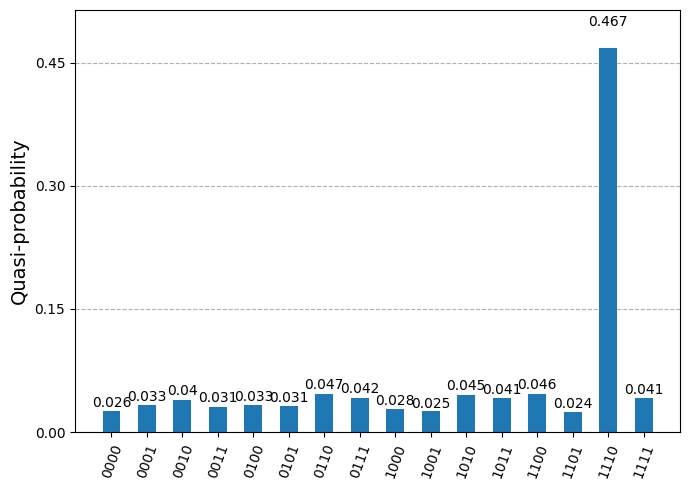
Makikita natin na ang Grover's algorithm ay nagbalik ng nais na estado na may pinakamataas na posibilidad nang malayo, kahit isang order of magnitude na mas mataas kaysa sa iba pang mga opsyon. Sa susunod na aktibidad, gagamitin natin ang algorithm sa paraang mas naaayon sa dalawang-partido na workflow ng isang query algorithm.
Suriin ang iyong pang-unawa
Naghanap lang tayo ng isang solusyon sa isang set ng na posibleng estado. Natukoy namin na ang pinakamainam na bilang ng pag-uulit ng Grover operator ay . Tataas o bababa ba ang pinakamainam na bilang na ito kung naghanap tayo ng (a) alinman sa maraming solusyon, o (b) isang solusyon sa isang espasyo ng higit pang posibleng estado?
Sagot
Alalahanin na hangga't ang bilang ng mga solusyon ay maliit kumpara sa buong espasyo ng mga solusyon, maaari nating i-expand ang sine function sa maliit na mga anggulo at gamitin ang:
(a) Makikita natin mula sa ekspresyon sa itaas na ang pagdaragdag ng bilang ng mga estado ng solusyon ay magbabawas ng bilang ng pag-uulit. Sa kondisyon na ang fraction na ay maliit pa rin, maaari nating ilarawan kung paano bababa ang :
(b) Habang tumataas ang espasyo ng mga posibleng solusyon (), tumataas din ang bilang ng mga kinakailangang pag-uulit, ngunit katulad lang ng .
Ipagpalagay na maaari tayong dagdagan ang laki ng target na bitstring nang walang hanggan at mayroon pa ring resulta na ang target na estado ay may probability amplitude na kahit isang order of magnitude na mas malaki kaysa sa anumang ibang estado. Ibig sabihin ba nito na maaari nating gamitin ang Grover's algorithm upang maaasahang mahanap ang target na estado?
Sagot
Hindi. Ipagpalagay na inulit natin ang unang aktibidad na may 20 qubit, at pinatakbo natin ang quantum circuit nang ilang beses na num_shots = 10,000. Ang pantay na distribusyon ng posibilidad ay nangangahulugang ang bawat estado ay may posibilidad na na masukat kahit isang beses. Kung ang posibilidad ng pagsusukat ng target na estado ay 10 beses na higit sa mga hindi solusyon (at ang posibilidad ng bawat hindi solusyon ay bahagyang bumaba nang naaayon), mayroon lamang mga 10% na pagkakataon na masukat ang target na estado kahit isang beses. Magiging napakahirap na masukat ang target na estado nang maraming beses, na magpapahirap na makilala ito mula sa maraming randomly na nakuhang estado na hindi solusyon. Ang magandang balita ay makakakuha tayo ng mas mataas na katumpakan ng mga resulta sa pamamagitan ng paggamit ng error suppression at mitigation.
Aktibidad 2: Isang tumpak na query algorithm na workflow
Sisimulan natin ang aktibidad na ito nang eksakto gaya ng una, maliban na ngayon ay magkasamang makikipagtulungan ka sa isa pang Qiskit enthusiast. Pipili ka ng isang lihim na bitstring, at pipili ang iyong kasosyo ng (sa pangkalahatan) ibang bitstring. Bawat isa sa inyo ay magge-generate ng quantum circuit na gumaganap bilang oracle, at ipagpapalit ninyo ang mga ito. Pagkatapos ay gagamit ka ng Grover's algorithm gamit ang oracle na iyon upang matukoy ang lihim na bitstring ng iyong kasosyo.
Hakbang 1: I-map ang mga klasikal na input sa isang quantum na problema
Gamit ang grover_oracle function na tinukoy sa itaas, bumuo ng isang oracle circuit para sa isa o higit pang markadong estado. Siguraduhing ipaalam mo sa iyong kasosyo kung gaano karaming estado ang iyong minarkahan, upang makapag-apply sila ng Grover operator ng pinakamainam na bilang ng beses. Huwag gawing masyadong mahaba ang iyong bitstring. Ang 3-5 bits ay dapat gumana nang walang kahirapan. Ang mas mahabang bitstring ay magreresulta sa mas malalim na circuit na nangangailangan ng mas advanced na mga teknik tulad ng error mitigation.
# Modify the marked states to mark those you wish to target.
marked_states = ["1000"]
oracle = grover_oracle(marked_states)
Ngayon ay lumikha ka ng isang quantum circuit na nagba-flip ng phase ng iyong target na estado. Maaari mong i-save ang circuit na ito bilang my_circuit.qpy gamit ang syntax sa ibaba.
from qiskit import qpy

# Save to a QPY file at a location where you can easily find it.
# You might want to specify a global address.
with open("C:\\Users\\...put your own address here...\\my_circuit.qpy", "wb") as f:
    qpy.dump(oracle, f)
Ngayon ipadala ang file na ito sa iyong kasosyo (sa pamamagitan ng email, messaging service, shared repo, at iba pa). Ipapadala rin ng iyong kasosyo ang kanilang circuit sa iyo. Siguraduhing i-save ang file sa isang lugar na madali mong mahanap. Kapag natanggap mo na ang circuit ng iyong kasosyo, maaari mo itong i-visualize — ngunit iyon ay lalabag sa query model. Ibig sabihin, nagmo-modelo tayo ng sitwasyon kung saan maaari mong i-query ang oracle (gamitin ang oracle circuit) ngunit hindi ito suriin upang matukoy kung anong estado ang nita-target nito.
from qiskit import qpy

# Load the circuit from your partner's qpy file from the folder where you saved it.
with open("C:\\Users\\...file location here...\\my_circuit.qpy", "rb") as f:
    circuits = qpy.load(f)

# qpy.load always returns a list of circuits
oracle_partner = circuits[0]

# You could visualize the circuit, but this would break the model of a query algorithm.
# oracle_partner.draw("mpl")
Tanungin ang iyong kasosyo kung gaano karaming target na estado ang kanilang na-encode at ilagay ito sa ibaba.
# Update according to your partner's number of target states.
num_marked_states = 1
Ginagamit ito sa susunod na ekspresyon upang matukoy ang pinakamainam na bilang ng Grover iterations.
grover_op = grover_operator(oracle_partner)
optimal_num_iterations = math.floor(
    math.pi / (4 * math.asin(math.sqrt(num_marked_states / 2**grover_op.num_qubits)))
)
qc = QuantumCircuit(grover_op.num_qubits)
qc.h(range(grover_op.num_qubits))
qc.compose(grover_op.power(optimal_num_iterations), inplace=True)
qc.measure_all()
Hakbang 2: I-optimize ang problema para sa pagpapatakbo sa quantum hardware
Ito ay eksaktong tulad ng dati.
# To run on hardware, select the backend with the fewest number of jobs in the queue
service = QiskitRuntimeService()
backend = service.least_busy(operational=True, simulator=False)
backend.name

target = backend.target
pm = generate_preset_pass_manager(target=target, optimization_level=3)
circuit_partner_isa = pm.run(qc)
Hakbang 3: I-execute gamit ang IBM Quantum primitives
Ito ay kapareho rin ng proseso sa unang aktibidad.
# To run on a real quantum computer (this was tested on a Heron r2 processor and used
# 4 seconds of QPU time)

from qiskit_ibm_runtime import SamplerV2 as Sampler

sampler = Sampler(mode=backend)
sampler.options.default_shots = 10_000
result = sampler.run([circuit_partner_isa]).result()
dist = result[0].data.meas.get_counts()
Hakbang 4: I-post-process at ibalik ang resulta sa nais na klasikal na format
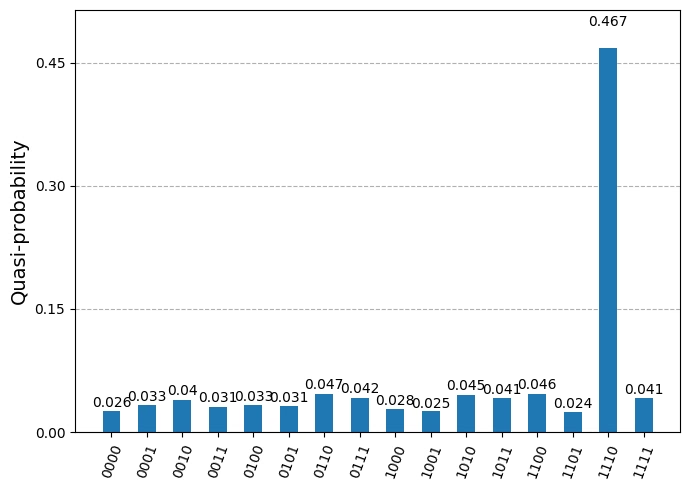
Ngayon ipakita ang isang histogram ng iyong mga resulta sa sampling. Ang isa o higit pang estado ay dapat na may mas mataas na posibilidad ng pagsusukat kaysa sa iba. I-ulat ang mga ito sa iyong kasosyo at suriin kung tama ang iyong natukoy na mga target na estado. Bilang default, ang histogram na ipinapakita ay mula sa parehong circuit ng unang aktibidad. Dapat kang makakuha ng iba't ibang resulta mula sa circuit ng iyong kasosyo.
plot_distribution(dist)
Suriin ang iyong pag-unawa
Dapat nang tama mong natukoy ang mga target na estado ng iyong kasosyo. Kung hindi, makipagtulungan sa iyong kasosyo upang matukoy kung ano ang nagkamali. I-click sa ibaba para sa ilang ideya.
Mga Pahiwatig
-
I-visualize/iguhit ang circuit ng iyong kasosyo at tiyaking na-load ito nang tama.
-
Ikumpara ang mga circuit na ginamit at ikumpara ang inaasahang resulta sa nakuha mo.
-
Suriin ang lalim ng mga circuit na ginamit upang matiyak na ang bitstring ay hindi masyadong mahaba o ang bilang ng Grover iterations ay hindi masyadong mataas.
Kung hindi mo pa nagagawa, iguhit ang oracle circuit na ipinadala ng iyong kasosyo sa iyo. Tingnan kung kaya mong pag-aralan ang epekto ng bawat gate at ipaliwanag kung ano ang dapat na target na estado. Ito ay magiging mas madali para sa kaso ng isang markadong estado kaysa sa marami.
Mga Pahiwatig
-
Alalahanin na ang trabaho ng oracle ay i-flip ang tanda ng target na estado.
-
Alalahanin na ang MCMTGate ay nagba-flip ng tanda sa isang estado kung at tanging kung lahat ng qubit na kasangkot sa kontrol ay nasa estado na .
-
Kung ang iyong target na estado ay magkakaroon ng sa isang partikular na qubit, hindi mo na kailangang gawin ang anuman sa qubit na iyon. Kung ang iyong target ay may sa isang partikular na qubit at gusto mong i-flip ng MCMTGate ang tanda, kailangan mong mag-apply ng
Xgate sa qubit na iyon sa iyong oracle (at pagkatapos ay i-undo angXgate pagkatapos ng MCMTGate).
Ulitin ang eksperimento na may isang beses na mas kaunting pag-uulit ng Grover operator. Makukuha mo pa ba ang tamang sagot? Bakit o bakit hindi?
Gabay
Malamang na oo, bagaman ito ay maaaring depende sa bilang ng mga na-encode na solusyon. Itinatampok nito ang isang subtlety: ang "pinakamainam" na bilang ng Grover iterations ay ang bilang na nagpapataas ng posibilidad ng pagsusukat ng markadong estado nang pinakamaataas. Ngunit ang mas kaunting pag-uulit kaysa roon ay maaari pa ring gawing mas malamang ang markadong estado kaysa sa iba pang mga estado. Kaya, maaari kang makarating sa mas kaunting pag-uulit kaysa sa pinakamainam na bilang. Binabawasan nito ang lalim ng circuit, at sa gayon ay binabawasan ang mga rate ng error.
Bakit gugustuhin ng isang tao na gumamit ng mas kaunting Grover iterations kaysa sa "pinakamainam na bilang" na natukoy dito?
Sagot
Ang "pinakamainam" na bilang ng Grover iterations ay ang bilang na nagpapataas ng posibilidad ng pagsusukat ng markadong estado nang pinakamaataas nang wala sa noise. Ngunit ang mas kaunting pag-uulit kaysa roon ay maaari pa ring gawing mas malamang ang markadong estado kaysa sa iba pang mga estado. Kaya, maaari kang makarating sa mas kaunting pag-uulit kaysa sa pinakamainam na bilang. Binabawasan nito ang lalim ng circuit, at sa gayon ay binabawasan ang mga rate ng error.
Aktibidad 3: Lutasin ang isang Minesweeper grid gamit ang Grover's algorithm
Sa nakaraang seksyon, napansin natin na ang Grover's algorithm ay tunay na nagiging kapaki-pakinabang kapag maaari tayong bumuo ng oracle mula sa mga constraint ng isang problema, sa halip na mula sa kaalaman ng sagot. Ang Minesweeper ay isang perpektong halimbawa: ang mga numeradong cell ay nagsasabi sa atin kung ilang mina ang katabing, at ang mga constraint na iyon ay ganap na nagtatakda kung nasaan dapat ang mga mina — ngunit ang paghanap ng configuration ay nangangailangan ng paghahanap.
Napatunayan na ang Minesweeper ay NP-complete: mahirap lutasin ngunit madaling suriin. Ginagawa itong natural na kandidato para sa Grover's algorithm. Siyempre, hindi pa tayo makakalutas ng buong 99 grid sa isang maingay na quantum computer — ang mga circuit ay magiging masyadong malalim. Sa halip, gagamit tayo ng napakaliit na grid bilang isang laruan na demonstrasyon kung paano lalalapitin ang isang mas malaking board sa isang hinaharap na fault-tolerant na makina.
Ilang mahahalagang caveat. Ang Grover's algorithm ay nagbibigay lamang ng quadratic speedup kumpara sa unstructured na klasikal na paghahanap. Ang Minesweeper ay halos tiyak na may magagamit na istraktura na maaaring gamitin ng isang matalinong klasikal na algorithm. At para sa exponentially lumalagong espasyo ng paghahanap, kahit ang na pagpapabuti ay may limitasyon. Ngunit itabi natin muna ang mga alalahanin na iyon at gamitin ang laruang problemang ito para ilarawan kung paano ang mga constraint ng problema ay na-encode sa isang quantum oracle.
Ang grid
Narito ang ating baby minesweeper grid:

Ang bawat blangkong cell ay maaaring katawanin ng isang binary na variable na nagpapahiwatig kung naglalaman ito ng isang mina. Lalagyan natin ito ng label na , , at , kung saan ang ay nangangahulugang may mina sa cell na iyon at ang ay nangangahulugang wala:

Maaari nating lutasin ito sa ating isipan sa halos kalahating segundo, ngunit ginagamit natin ang laruang problemang ito para ilarawan kung paano malalapitan ang isang mas mahirap na board gamit ang isang quantum computer.
I-encode ang mga constraint
Ang bawat numeradong cell ay naglalagay ng kondisyon sa mga katabing blangkong cell. Kailangan nating ipahayag ang mga kondisyon na ito bilang mga Boolean na ekspresyon na maaaring i-encode sa isang quantum circuit.
Ang cell na "1" na katabi ng at ay nagsasabi na eksaktong isa sa kanila ang naglalaman ng mina. Ito ay eksakto ang exclusive-OR (XOR) na operasyon, , na nagbabalik ng true kapag eksaktong isa sa mga input nito ay true:
Katulad nito, ang isa pang cell na "1" (katabi ng at ) ay nagbibigay sa atin ng:
Ang cell na "2" ay nagsasabi na dalawa sa tatlong blangkong cell ang dapat maglaman ng mga mina. Dahil ang XOR ay isang parity na operasyon, ang ay nagbabalik ng true kapag gansal na bilang ng mga variable ay true. Gusto namin ng pares na bilang (partikular na dalawa) na maging true, kaya itinatanggi namin gamit ang :
Nang mag-isa, ang ekspresyong ito ay matutugunan ng alinman sa zero o dalawang qubit sa na estado, dahil ito ay isang pahayag tungkol sa parity. Ngunit kasama ang iba pang dalawang clause, na bawat isa ay nangangailangan ng hindi bababa sa isang mina, ang tanging nakakatugon na assignment ay may eksaktong dalawang mina.
Ang tatlong kondisyon ay dapat matugunan nang sabay-sabay, kaya pinagsama namin sila gamit ang mga simbolo ng and :
Hakbang 1: I-map ang mga klasikal na input sa isang quantum na problema
Ngayon kailangan nating i-encode ang Boolean na ekspresyong ito sa isang quantum circuit na nagsisilbing oracle. Ang quantum na bersyon ng XOR ay maaaring gawin gamit ang mga CX (CNOT) gate: ang pag-apply ng dalawang CX gate mula sa mga data qubit patungo sa isang workspace (ancilla) qubit ay epektibong nagkukuwenta ng kanilang XOR at nag-iimbak ng resulta sa ancilla.
Nagpapakilala tayo ng tatlong workspace qubit — isa para sa bawat clause. Iniimbak natin ang resulta ng bawat Boolean na ekspresyon sa katumbas na workspace qubit nito, pagkatapos ay gumagamit ng multi-controlled Z gate para i-flip ang phase ng three-qubit state na gumagawa ng lahat ng tatlong workspace qubit na (ibig sabihin ang lahat ng clause ay natutugunan nang sabay-sabay).
Sa unang code cell sa ibaba, binubuo natin ang "compute" na kalahati ng oracle — ang bahaging nagse-evaluate ng bawat clause at nagsusulat ng resulta sa mga workspace qubit.
x = QuantumRegister(3, "x")
a = QuantumRegister(3, "a")
qc = QuantumCircuit(x, a)

# Clause 1: x0 XOR x1 -> stored in a[0]
qc.cx(x[0], a[0])
qc.cx(x[1], a[0])

# Clause 2: x1 XOR x2 -> stored in a[1]
qc.cx(x[1], a[1])
qc.cx(x[2], a[1])

# Clause 3: NOT(x0 XOR x1 XOR x2) -> stored in a[2]
qc.cx(x[0], a[2])
qc.cx(x[1], a[2])
qc.cx(x[2], a[2])
qc.x(a[2])  # The NOT

qc.draw("mpl", style="iqp")
Sa puntong ito, ang resulta ng bawat clause ay nakaimbak sa katumbas na workspace qubit nito. Ngayon kailangan ang three-qubit data state na gumagawa ng lahat ng tatlong workspace qubit na para kumuha ng minus sign. Ginagawa natin ito gamit ang isang multi-controlled Z gate (ipinatupad bilang isang MCX gate na napapalibutan ng mga Hadamard gate sa target).
Pagkatapos i-apply ang phase flip, kailangan nating i-uncompute — i-undo ang lahat ng mga hakbang ng clause-evaluation sa kabaligtarang pagkakasunod-sunod — para i-reset ang mga workspace qubit pabalik sa . Mahalaga ito upang ang mga workspace qubit ay malinis para sa mga kasunod na pag-uulit ng Grover operator.
# Multi-controlled Z: flip phase if all workspace qubits are |1>
qc.h(a[2])
qc.mcx([a[0], a[1]], a[2])
qc.h(a[2])

# Uncompute clause 3: NOT(x0 XOR x1 XOR x2)
qc.x(a[2])
qc.cx(x[2], a[2])
qc.cx(x[1], a[2])
qc.cx(x[0], a[2])

# Uncompute clause 2: x1 XOR x2
qc.cx(x[2], a[1])
qc.cx(x[1], a[1])

# Uncompute clause 1: x0 XOR x1
qc.cx(x[1], a[0])
qc.cx(x[0], a[0])

qc.draw("mpl", style="iqp")
Ang circuit na ito ang ating oracle: nagba-flip ito ng phase ng data-qubit state na nakakatugon sa lahat ng tatlong Minesweeper constraint, at iniiwan ang mga workspace qubit pabalik sa .
Ngayon bumubuo tayo ng buong Grover operator mula sa oracle na ito. Pansinin ang reflection_qubits argument: nagpapasa lang tayo ng mga data qubit x, dahil ang mga workspace qubit ay hindi bahagi ng espasyo ng paghahanap. Tapos na ang kanilang trabaho kapag nailapat na ang oracle.
grover_op = grover_operator(qc, reflection_qubits=x)
grover_op.decompose(reps=0).draw(output="mpl", style="iqp")
Sa tatlong data qubit at isang estado ng solusyon, ang pinakamainam na bilang ng Grover iteration ay , kaya gumagamit tayo ng dalawang pag-uulit. Nag-a-apply tayo ng mga Hadamard gate sa mga data qubit para lumikha ng paunang superposition, kino-compose ang Grover operator nang dalawang beses, at sinusukat lamang ang mga data qubit.
x = QuantumRegister(3, "x")
a = QuantumRegister(4, "a")
meas = ClassicalRegister(3, "meas")

qc = QuantumCircuit(x, a, meas)
# Create superposition over the data qubits only
qc.h(x)
# Apply 2 iterations of the Grover operator
qc.compose(grover_op.power(2), inplace=True)
# Measure only the data qubits
qc.measure(x, meas)
qc.decompose().draw(output="mpl", style="iqp")
Hakbang 2: I-optimize ang problema para sa pagpapatakbo sa quantum hardware
Tulad ng dati, tina-transpile natin ang circuit para sa target backend.
service = QiskitRuntimeService()
backend = service.least_busy(operational=True, simulator=False)
print(backend.name)

target = backend.target
pm = generate_preset_pass_manager(target=target, optimization_level=3)
circuit_isa = pm.run(qc)
Ngayon maaari na nating suriin ang lalim ng transpiled na circuit. Dahil ang Minesweeper oracle ay gumagamit ng mga workspace qubit at maraming CX gate, ang transpiled na circuit ay magiging mas malalim kaysa sa mga mula sa mga nakaraang aktibidad.
print("The total depth is ", circuit_isa.depth())
print(
    "The depth of two-qubit gates is ",
    circuit_isa.depth(lambda instruction: instruction.operation.num_qubits == 2),
)
Hakbang 3: I-execute gamit ang IBM Quantum primitives
# To run on a real quantum computer (this was tested on a Heron r2 processor and
#  used 4 sec. of QPU time)

from qiskit_ibm_runtime import SamplerV2 as Sampler

sampler = Sampler(mode=backend)
sampler.options.default_shots = 10_000
result = sampler.run([circuit_isa]).result()
dist = result[0].data.meas.get_counts()
# To run on local simulator:
# from qiskit.primitives import StatevectorSampler as Sampler
# sampler = Sampler()
# result = sampler.run([qc]).result()
# dist = result[0].data.meas.get_counts()
Hakbang 4: I-post-process at ibalik ang resulta sa nais na klasikal na format
plot_distribution(dist)
Ang estado na 101 ay dapat lumabas nang may mas mataas na posibilidad kaysa sa anumang iba pa, na nagpapahiwatig na ang mga mina ay matatagpuan sa at . Ginamit natin ang isang quantum computer para lutasin ang isang maliit na laro ng Minesweeper!
Siyempre, ang pinakamahusay na mga klasikal na algorithm para sa minesweeper ay mas mahusay kaysa sa isang brute-force na paghahanap sa lahat ng posibleng configuration ng mina — pinagsasamantalahan nila ang istraktura ng grid. Ang Grover's algorithm ay mag-aalok lamang ng kalamangan sa mga napakahirap na board na dinisenyo para maging pinaka-malabo, at kahit noon, ang quadratic speedup ay hindi makakasabay sa exponential na paglago nang walang katiyakan. Ngunit ang tunay na aral ay ang pamamaraan: ang pag-encode ng mga constraint ng problema sa isang quantum oracle ay isang makapangyarihang pattern na umaabot sa constraint satisfaction, combinatorial optimization, at marami pang ibang domain.
Mga Tanong at kritikal na konsepto:
Mga kritikal na konsepto:
Sa module na ito, natutunan natin ang ilang pangunahing katangian ng Grover's algorithm:
- Habang ang mga klasikal na unstructured search algorithm ay nangangailangan ng bilang ng mga query na lumalago nang linearly sa laki ng espasyo, ang Grover's algorithm ay nangangailangan ng bilang ng mga query na lumalago tulad ng
- Ang Grover's algorithm ay kinabibilangan ng pag-uulit ng isang serye ng mga operasyon (karaniwang tinatawag na "Grover operator") nang na beses, na pinili upang gawing pinaka-malamang na masukat ang mga target na estado.
- Ang Grover's algorithm ay maaaring patakbuhin na may mas kaunti kaysa sa na pag-uulit at makapag-amplify pa rin ng mga target na estado.
- Ang Grover's algorithm ay angkop sa query model ng computation at pinakamakatuturan kapag isang tao ang kumokontrol sa paghahanap at ang isa ay kumokontrol/nagtatayo ng oracle. Maaari din itong maging kapaki-pakinabang bilang isang subroutine sa iba pang mga quantum computation.
- Ang isang oracle ay maaaring maitayo mula sa mga constraint ng problema sa halip na mula sa kaalaman ng solusyon, gaya ng ipinakita sa halimbawa ng Minesweeper.
Mga T/M na tanong:
-
T/M Ang Grover's algorithm ay nagbibigay ng exponential na pagpapabuti kumpara sa mga klasikal na algorithm sa bilang ng mga query na kailangan upang mahanap ang isang markadong estado sa unstructured search.
-
T/M Ang Grover's algorithm ay gumagana sa pamamagitan ng paulit-ulit na pagdaragdag ng posibilidad na masukat ang isang estado ng solusyon.
-
T/M Habang mas maraming beses na ini-iterate ang Grover operator, mas mataas ang posibilidad ng pagsusukat ng isang estado ng solusyon.
Mga MC na tanong:
- Piliin ang pinakamahusay na opsyon upang makumpleto ang pangungusap. Ang pinakamahusay na estratehiya upang matagumpay na magamit ang Grover's algorithm sa mga modernong quantum na computer ay ang pag-iterate ng Grover operator...
-
a. Isang beses lamang.
-
b. Palaging na beses, upang ma-maximize ang probability amplitude ng mga estado ng solusyon.
-
c. Hanggang na beses, bagaman ang mas kaunti ay maaaring sapat upang mapansin ang mga estado ng solusyon.
-
d. Hindi bababa sa 10 beses.
- Ang isang phase query circuit ay ipinapakita dito na gumaganap bilang isang oracle upang markahan ang isang tiyak na estado ng isang phase flip. Alin sa mga sumusunod na estado ang minarkahan ng circuit na ito?

-
a.
-
b.
-
c.
-
d.
-
e.
-
f.
- Ipagpalagay na nais mong maghanap ng tatlong markadong estado mula sa isang set ng 128. Ano ang pinakamainam na bilang ng pag-uulit ng Grover operator upang ma-maximize ang mga amplitude ng mga markadong estado?
-
a. 1
-
b. 3
-
c. 5
-
d. 6
-
e. 20
-
f. 33
Mga tanong para sa talakayan:
-
Anong iba pang mga problema ang maaari mong i-formulate bilang isang Grover search? Mag-isip ng mga problema kung saan mahirap hanapin ang solusyon ngunit madali itong ma-verify.
-
Makikita mo ba ang anumang mga problema sa pag-scale ng Grover's algorithm sa mga modernong quantum na computer?