Bloch sphere
May isang kapaki-pakinabang na geometric na paraan para kumatawan sa mga qubit state na kilala bilang ang Bloch sphere. Napaka-convenient nito, pero sa kasamaang-palad ay gumagana lang ito para sa mga qubit — ang katumbas na representasyon ay hindi na tumutugma sa isang spherical na bagay kapag tatlo o higit pa ang ating mga klasikal na estado ng sistema.
Mga qubit state bilang mga punto sa isang sphere
Magsimula tayo sa pag-iisip tungkol sa isang quantum state vector ng isang qubit: Maaari nating limitahan ang ating atensyon sa mga vector kung saan ang ay isang non-negative na tunay na numero dahil ang bawat qubit state vector ay katumbas hanggang sa isang global phase sa isa kung saan ang Nagbibigay-daan ito sa ating isulat ang
para sa dalawang tunay na numero na at . Dito, pinayagan nating lumayo ang mula hanggang at hinihati sa sa argumento ng sine at cosine dahil ito ay isang karaniwang paraan para i-parameterize ang mga vector ng ganitong uri, at ito ay magpapasimple ng mga bagay nang kaunti sa bandang huli.
Ngayon, hindi talaga tama na ang mga numero na at ay natatanging natutukoy ng isang ibinigay na quantum state vector na , pero halos ganoon na. Sa partikular, kung ang , kung gayon ang at walang pagkakaiba kung anong halaga ang kinukuha ng , kaya maaari itong piliin nang arbitraryo. Gayundin, kung ang , kung gayon ang , at muli ay hindi na mahalaga ang (dahil ang ating estado ay katumbas ng para sa anumang hanggang sa isang global phase). Kung, gayunpaman, wala sa o ang zero, kung gayon may natatanging pagpipilian para sa pares na kung saan ang ay katumbas ng hanggang sa isang global phase.
Susunod, isaalang-alang natin ang density matrix na representasyon ng estadong ito.
Maaari tayong gumamit ng ilang trigonometric na pagkakatulad,
pati na rin ang formula na , para pasimplehin ang density matrix tulad ng sumusunod.
Ginagawa nitong madali ang pag-express ng density matrix na ito bilang isang linear combination ng mga Pauli matrix:
Partikular, natutuklasan natin na
Ang mga coefficient ng at sa numerator ng expression na ito ay lahat tunay na mga numero, kaya maaari nating kolektahin ang mga ito para bumuo ng isang vector sa isang ordinaryo, tatlong-dimensiyonal na Euclidean space.
Sa katunayan, ito ay isang unit vector. Gamit ang spherical coordinates maaari itong isulat bilang Ang unang coordinate, ay kumakatawan sa radius o radial distance (na palaging sa kasong ito), ang ay kumakatawan sa polar angle, at ang ay kumakatawan sa azimuthal angle.
Sa madaling salita, kung iisipin ang isang sphere bilang planeta Lupa, ang polar angle na ay kung gaano kalayo tayong umikot patimog mula sa north pole para maabot ang puntong inilalarawan, mula hanggang , habang ang azimuthal angle na ay kung gaano kalayo tayong umikot pasilangan mula sa prime meridian, mula hanggang . Ipinapalagay nito na tinukoy natin ang prime meridian bilang ang kurba sa ibabaw ng sphere mula sa isang poste hanggang sa isa pa na dumadaan sa positibong -axis.
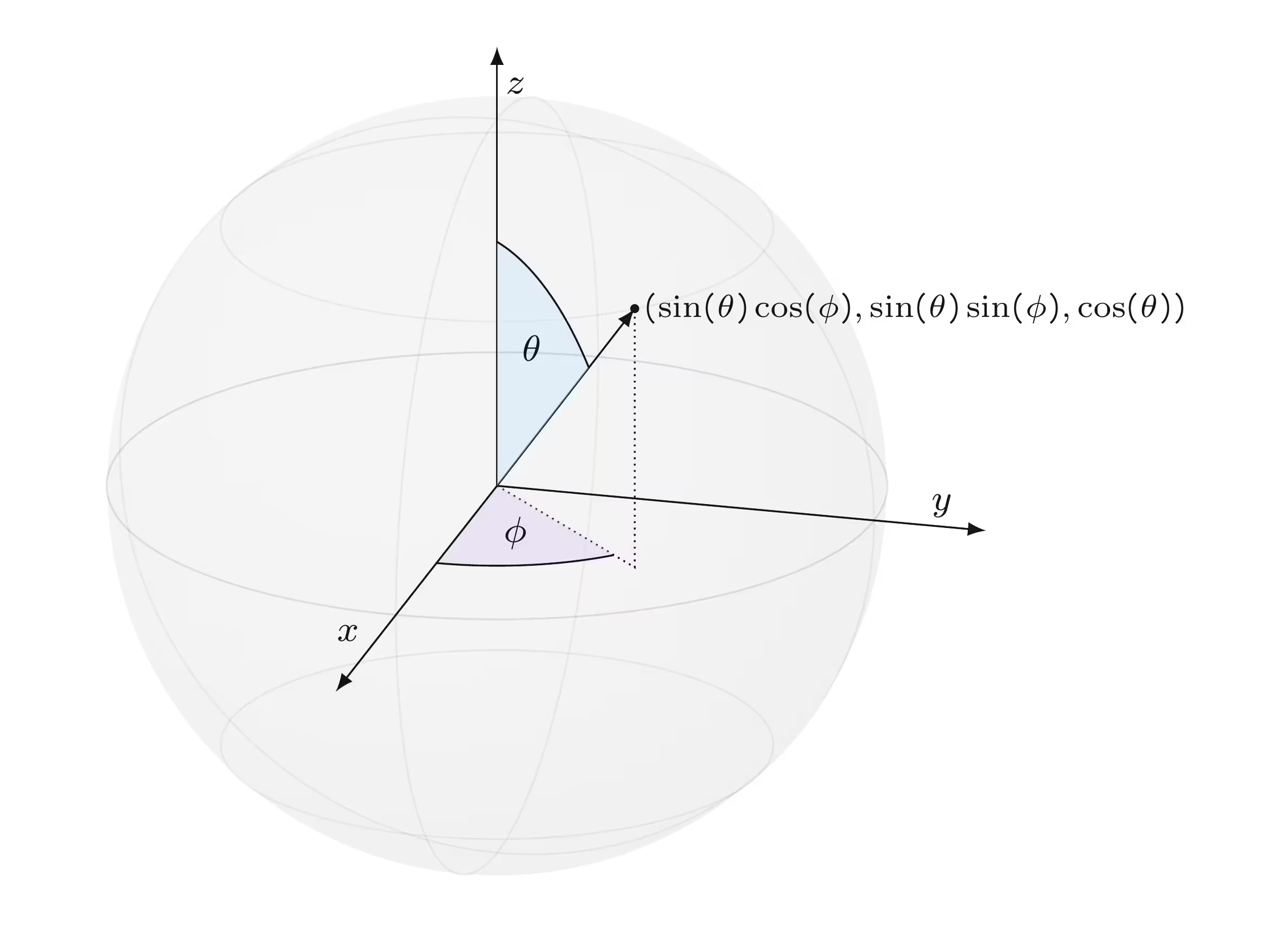
Ang bawat punto sa sphere ay maaaring ilarawan sa ganitong paraan — ibig sabihin, ang mga puntong makukuha natin kapag nag-range tayo sa lahat ng posibleng pure state ng isang qubit ay eksakto na tumutugma sa isang sphere sa tunay na dimensyon. (Ang sphere na ito ay karaniwang tinatawag na unit -sphere dahil ang ibabaw ng sphere na ito ay dalawang-dimensiyonal.)
Kapag iniugnay natin ang mga punto sa unit -sphere sa mga pure state ng mga qubit, makukuha natin ang Bloch sphere na representasyon ng mga estadong ito.
Anim na mahahalagang halimbawa
-
Ang standard basis . Magsimula tayo sa estado na . Bilang isang density matrix maaari itong isulat tulad nito.
Sa pamamagitan ng pagkolekta ng mga coefficient ng mga Pauli matrix sa numerator, nakikita natin na ang katumbas na punto sa unit -sphere gamit ang Cartesian coordinates ay . Sa spherical coordinates ang puntong ito ay , kung saan ang ay maaaring anumang anggulo. Ito ay naaayon sa expression na
na gumagana rin para sa anumang . Sa intuitive na paraan, ang polar angle na ay zero, kaya nasa north pole tayo ng Bloch sphere, kung saan ang azimuthal angle ay hindi mahalaga.
Katulad nito, ang density matrix para sa estado na ay maaaring isulat tulad nito.
Sa pagkakataong ito ang Cartesian coordinates ay . Sa spherical coordinates ang puntong ito ay kung saan ang ay maaaring anumang anggulo. Sa kasong ito ang polar angle ay umabot na sa , kaya nasa south pole tayo kung saan ang azimuthal angle ay muli na namang hindi mahalaga.
-
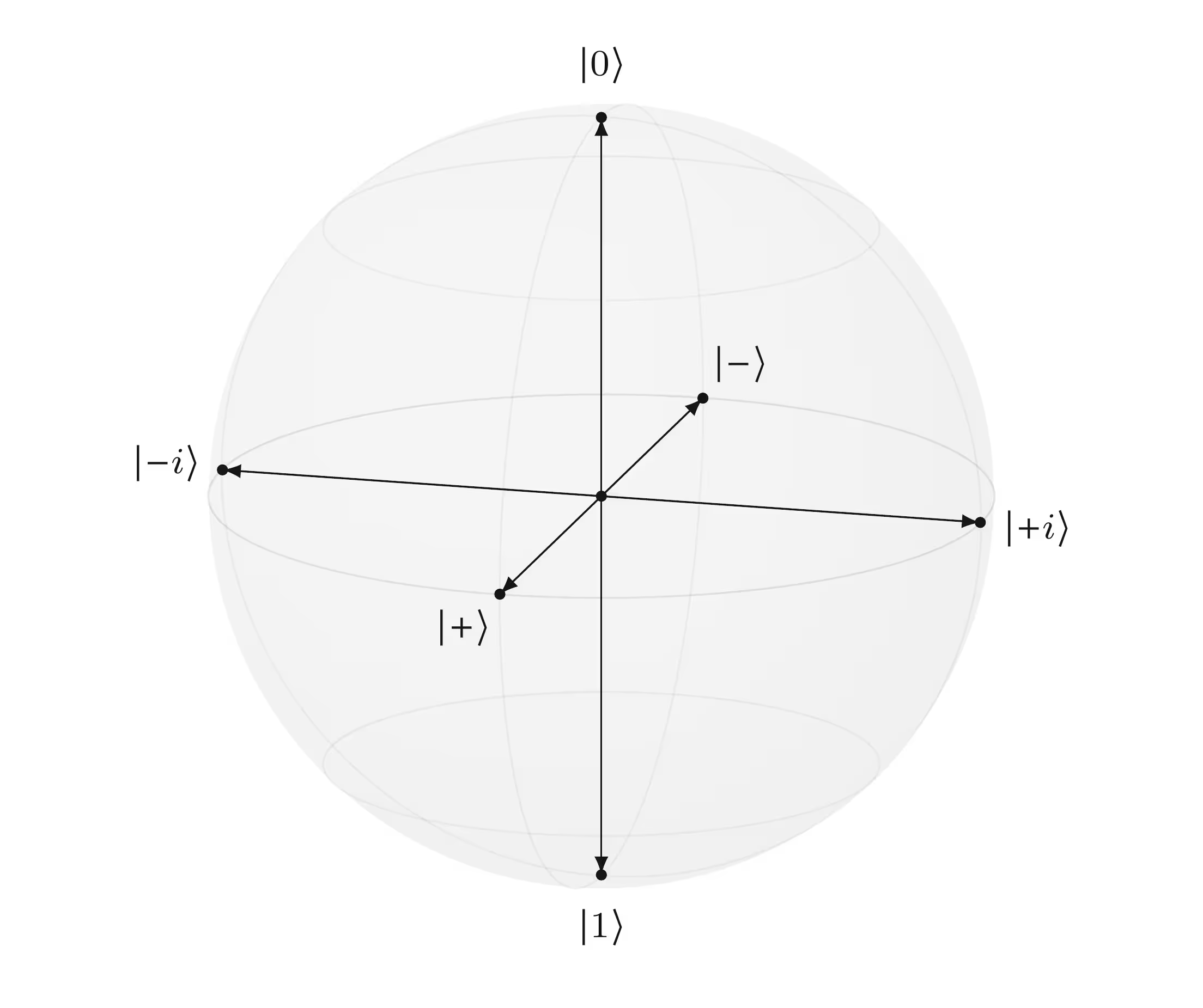
Ang basis na . Mayroon tayong mga expression na ito para sa mga density matrix na katumbas ng mga estadong ito.
Ang katumbas na mga punto sa unit -sphere ay may Cartesian coordinates na at , at spherical coordinates na at , ayon sa pagkakasunod.
Sa madaling salita, ang ay tumutugma sa puntong kung saan ang positibong -axis ay tumatawid sa unit -sphere at ang ay tumutugma sa puntong kung saan ang negatibong -axis ay tumatawid dito. Sa mas intuitive na paraan, ang ay nasa ekwador ng Bloch sphere kung saan ito ay nagtatagpo sa prime meridian, at ang ay nasa ekwador sa kabilang panig ng sphere.
-
Ang basis . Tulad ng nakita natin kanina sa aralin, ang dalawang estadong ito ay tinukoy tulad nito:
Sa pagkakataong ito mayroon tayong mga expression na ito.
Ang katumbas na mga punto sa unit -sphere ay may Cartesian coordinates na at , at spherical coordinates na at , ayon sa pagkakasunod.
Sa madaling salita, ang ay tumutugma sa puntong kung saan ang positibong -axis ay tumatawid sa unit -sphere at ang sa puntong kung saan ang negatibong -axis ay tumatawid dito.
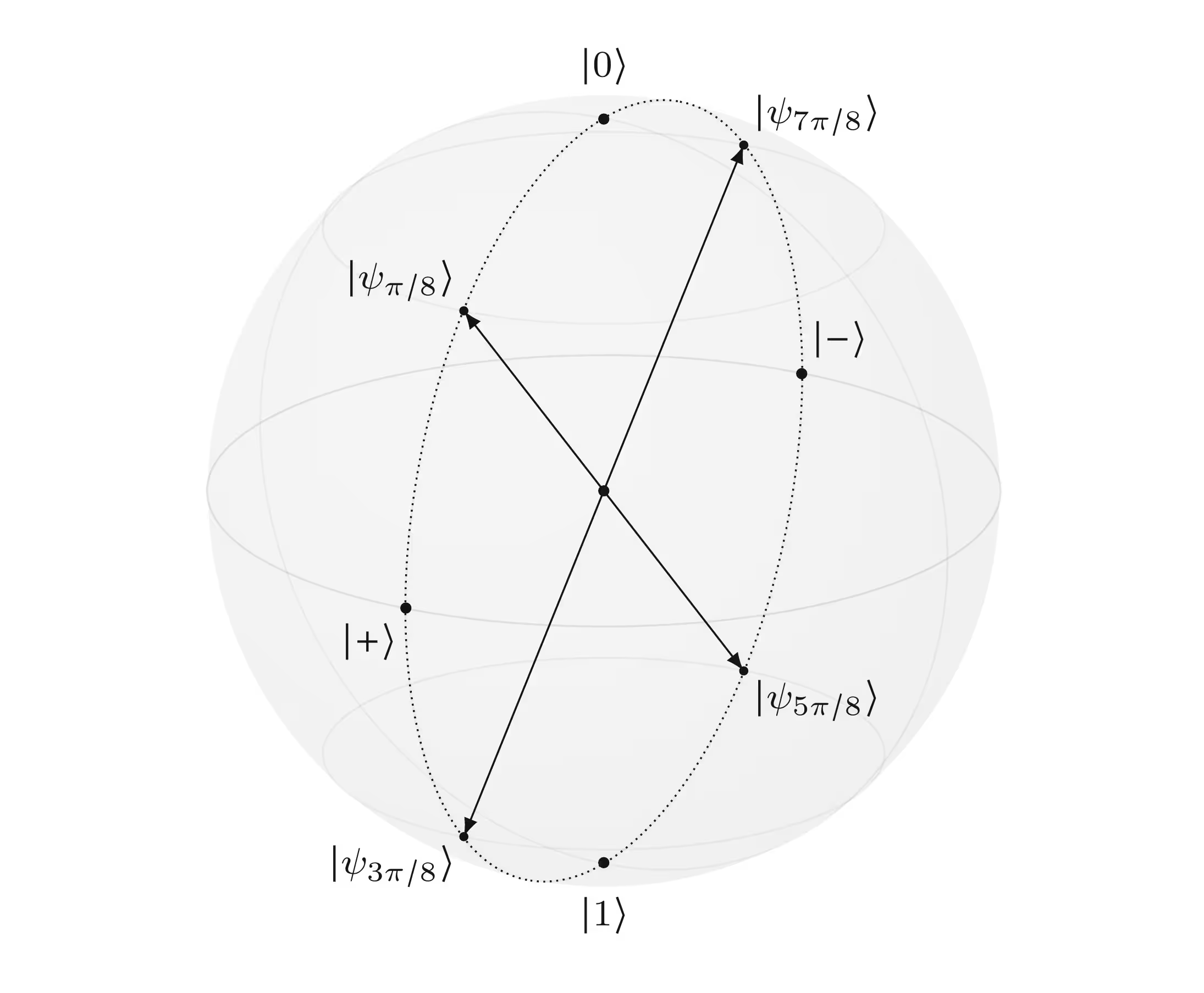
Narito ang isa pang klase ng mga quantum state vector na lumabas nang paminsan-minsan sa buong seryeng ito, kasama na ang dati sa araling ito.
Ang density matrix na representasyon ng bawat isa sa mga estadong ito ay ganito.
Ang sumusunod na figure ay naglalarawan ng katumbas na mga punto sa Bloch sphere para sa ilang pagpipilian para sa .
Mga convex combination ng mga punto
Katulad ng naipakita na natin para sa mga density matrix, maaari tayong kumuha ng mga convex combination ng mga punto sa Bloch sphere para makakuha ng mga representasyon ng mga qubit density matrix. Sa pangkalahatan, nagreresulta ito sa mga puntong loob ng Bloch sphere, na kumakatawan sa mga density matrix ng mga estado na hindi pure. Minsan tinutukoy natin ang Bloch ball kapag nais nating maging malinaw tungkol sa pagsasama ng mga punto sa loob ng Bloch sphere bilang mga representasyon ng mga qubit density matrix.
Halimbawa, nakita natin na ang density matrix na , na kumakatawan sa ganap na mixed na estado ng isang qubit, ay maaaring isulat sa dalawang alternatibong paraan na ito:
Mayroon din tayong
at mas pangkalahatan ay maaari tayong gumamit ng anumang dalawang orthogonal na qubit state vector (na palaging tumutugma sa dalawang antipodal na punto sa Bloch sphere). Kung ia-average natin ang katumbas na mga punto sa Bloch sphere sa katulad na paraan, makukuha natin ang parehong punto, na sa kasong ito ay nasa gitna ng sphere. Ito ay naaayon sa obserbasyon na
na nagbibigay sa atin ng Cartesian coordinates na .
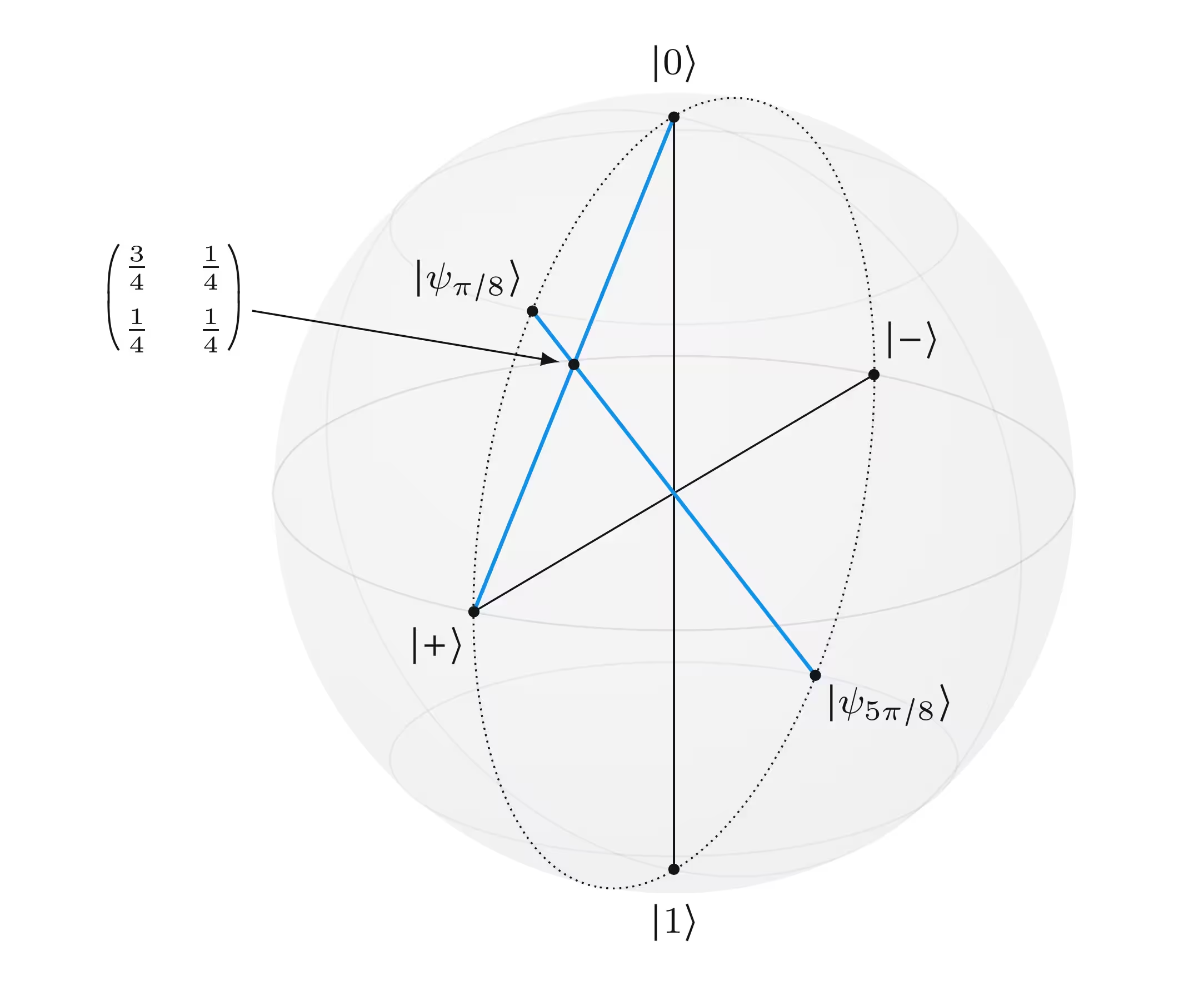
Ang ibang halimbawa tungkol sa mga convex combination ng mga Bloch sphere point ay ang tinalakay sa nakaraang subseksyon.
Ang sumusunod na figure ay naglalarawan ng dalawang magkaibang paraan ng pagkuha ng density matrix na ito bilang isang convex combination ng mga pure state.