Mga matematikal na pormulasyon ng mga sukat
Ang aralin ay nagsisimula sa dalawang katumbas na matematikal na paglalarawan ng mga sukat:
-
Ang mga pangkalahatang sukat ay maaaring ilarawan sa pamamagitan ng mga koleksyon ng mga matris, isa para sa bawat resulta ng sukat, sa paraang nagpapalawak sa paglalarawan ng mga projective na sukat.
-
Ang mga pangkalahatang sukat ay maaaring ilarawan bilang mga channel na ang mga output ay palaging mga klasikal na estado (kinakatawan ng mga diagonal na density matrix).
Ilililmita natin ang ating pansin sa mga sukat na may tiyak na bilang ng mga posibleng resulta. Bagama't posible ang mga sukat na may walang katapusang bilang ng mga resulta, mas bihira itong makita sa konteksto ng computation at pagpoproseso ng impormasyon, at nangangailangan din ng karagdagang matematika (lalo na ang measure theory) para maayos na mapormal.
Ang ating unang pokus ay sa tinatawag na mapanirang (destructive) na mga sukat, kung saan ang output ng sukat ay isang klasikal na resulta lamang — nang walang detalye ng post-measurement na quantum na estado ng sistemang sinukat. Sa simpleng salita, maaari nating isipin na winawasak ng ganitong sukat ang quantum system mismo, o kaya'y agad na itinatapon ang sistema pagkatapos ng sukat. Mamaya sa aralin, palawakin natin ang ating pananaw at isasaalang-alang ang hindi mapanirang (non-destructive) na mga sukat, kung saan mayroon parehong klasikal na resulta at post-measurement na quantum na estado ng sinukat na sistema.
Mga sukat bilang koleksyon ng mga matris
Ipagpalagay na ang ay isang sistema na susukatin, at para sa simplisidad, ipagpalagay na ang klasikal na set ng estado ng ay para sa ilang positibong integer na , kaya ang mga density matrix na kumakatawan sa mga quantum na estado ng ay mga na matris. Hindi talaga natin kailangang lubos na sumangguni sa mga klasikal na estado ng , ngunit magiging kapaki-pakinabang na tumukoy sa , ang bilang ng mga klasikal na estado ng . Ipagpalagay din natin na ang mga posibleng resulta ng sukat ay mga integer na para sa ilang positibong integer na .
Tandaan na ginagamit lang natin ang mga pangalang ito para gawing simple ang mga bagay; diretso ang pagpapalawak ng lahat ng susunod sa ibang mga tiyak na set ng mga klasikal na estado at resulta ng sukat, binabago ang kanilang mga pangalan ayon sa nais.
Mga projective na sukat
Alalahanin na ang isang projective na sukat ay inilarawan ng koleksyon ng mga projection matrix na ang kabuuan ay katumbas ng identity matrix. Sa simbolo,
ay naglalarawan ng isang projective na sukat ng kung ang bawat ay isang na projection matrix at natutupad ang sumusunod na kondisyon.
Kapag ginanap ang ganitong sukat sa isang sistema habang ito ay nasa isang estado na inilarawan ng ilang quantum state vector na , ang bawat resulta na ay nakukuha nang may probabilidad na katumbas ng . Mayroon din tayong post-measurement na estado ng na nakukuha sa pamamagitan ng pag-normalize ng vector na , ngunit binabalewala natin ang post-measurement na estado sa ngayon.
Kung ang estado ng ay inilarawan ng isang density matrix na sa halip na isang quantum state vector na , maaari nating alternatibong ipahayag ang probabilidad na makuha ang resulta na bilang .
Kung ang ay isang pure state, ang dalawang expression ay pantay:
Dito ginagamit natin ang cyclic property ng trace para sa ikalawang pagkakapantay, at para sa ikatlong pagkakapantay ginagamit natin ang katotohanan na ang bawat ay isang projection matrix, at samakatuwid ay nakakatugon sa .
Sa pangkalahatan, kung ang ay isang convex combination
ng mga pure state, ang expression na ay naaayon sa average na probabilidad para sa resulta na , dahil sa katotohanang ang expression na ito ay linear sa .
Mga pangkalahatang sukat
Ang isang matematikal na paglalarawan para sa mga pangkalahatang sukat ay nakukuha sa pamamagitan ng pagpapaluwag ng kahulugan ng mga projective na sukat. Partikular, pinapayagan natin ang mga matris sa koleksyon na nagpapaliwanag ng sukat na maging arbitraryong positive semidefinite na mga matris sa halip na mga projection. (Ang mga projection ay palaging positive semidefinite; maaari rin silang tukuyin bilang mga positive semidefinite na matris na ang mga eigenvalue ay lahat ay 0 o 1.)
Partikular, ang isang pangkalahatang sukat ng isang sistema na may mga resulta na ay tinukoy ng isang koleksyon ng mga positive semidefinite na matris na ang mga row at column ay naaayon sa mga klasikal na estado ng at nakakatugon sa kondisyon
Kung ang sistema ay sinukat habang ito ay nasa isang estado na inilarawan ng density matrix na , ang bawat resulta ay lumilitaw nang may probabilidad na .
Gaya ng natural na inaasahan, ang vector ng mga probabilidad ng resulta
ng isang pangkalahatang sukat ay palaging bumubuo ng isang probability vector, para sa anumang pagpili ng density matrix na . Ang sumusunod na dalawang obserbasyon ay nagpapatunay na ito ang kaso.
-
Ang bawat halaga na ay dapat na hindi negatibo, dahil sa katotohanang ang trace ng produkto ng anumang dalawang positive semidefinite na matris ay palaging hindi negatibo:
Isang paraan upang patunayan ang katotohanang ito ay ang paggamit ng mga spectral decomposition ng at kasama ang cyclic property ng trace upang ipahayag ang trace ng produkto na bilang isang kabuuan ng mga hindi negatibong tunay na bilang, na samakatuwid ay hindi negatibo.
-
Ang kondisyon na kasama ng linearity ng trace ay tinitiyak na ang kabuuan ng mga probabilidad ay .
Halimbawa 1: anumang projective na sukat
Ang mga projection ay palaging positive semidefinite, kaya ang bawat projective na sukat ay isang halimbawa ng isang pangkalahatang sukat.
Halimbawa, ang isang standard basis measurement ng isang qubit ay maaaring katawanin ng kung saan
Ang pagsukat ng isang qubit sa estado na ay nagdudulot ng mga probabilidad ng resulta tulad ng sumusunod.
Halimbawa 2: isang hindi projective na sukat ng qubit
Ipagpalagay na ang ay isang qubit, at tukuyin ang dalawang matris tulad ng sumusunod.
Ang dalawa ay kapwa positive semidefinite na matris: sila ay Hermitian, at sa parehong kaso ang mga eigenvalue ay , na kapwa positibo. Mayroon din tayong , at samakatuwid ang ay naglalarawan ng isang sukat.
Kung ang estado ng ay inilarawan ng isang density matrix na at ginagawa natin ang sukat na ito, ang probabilidad na makuha ang resulta na ay at ang probabilidad na makuha ang resulta na ay . Halimbawa, kung ang ang mga probabilidad para sa dalawang resulta na at ay tulad ng sumusunod.
Halimbawa 3: tetrahedral na sukat
Tukuyin ang apat na single-qubit na quantum state vector tulad ng sumusunod.
Ang apat na estadong ito ay kilala minsan bilang mga tetrahedral na estado dahil sila ay mga vertex ng isang regular na tetrahedron na nakasulat sa loob ng Bloch sphere.
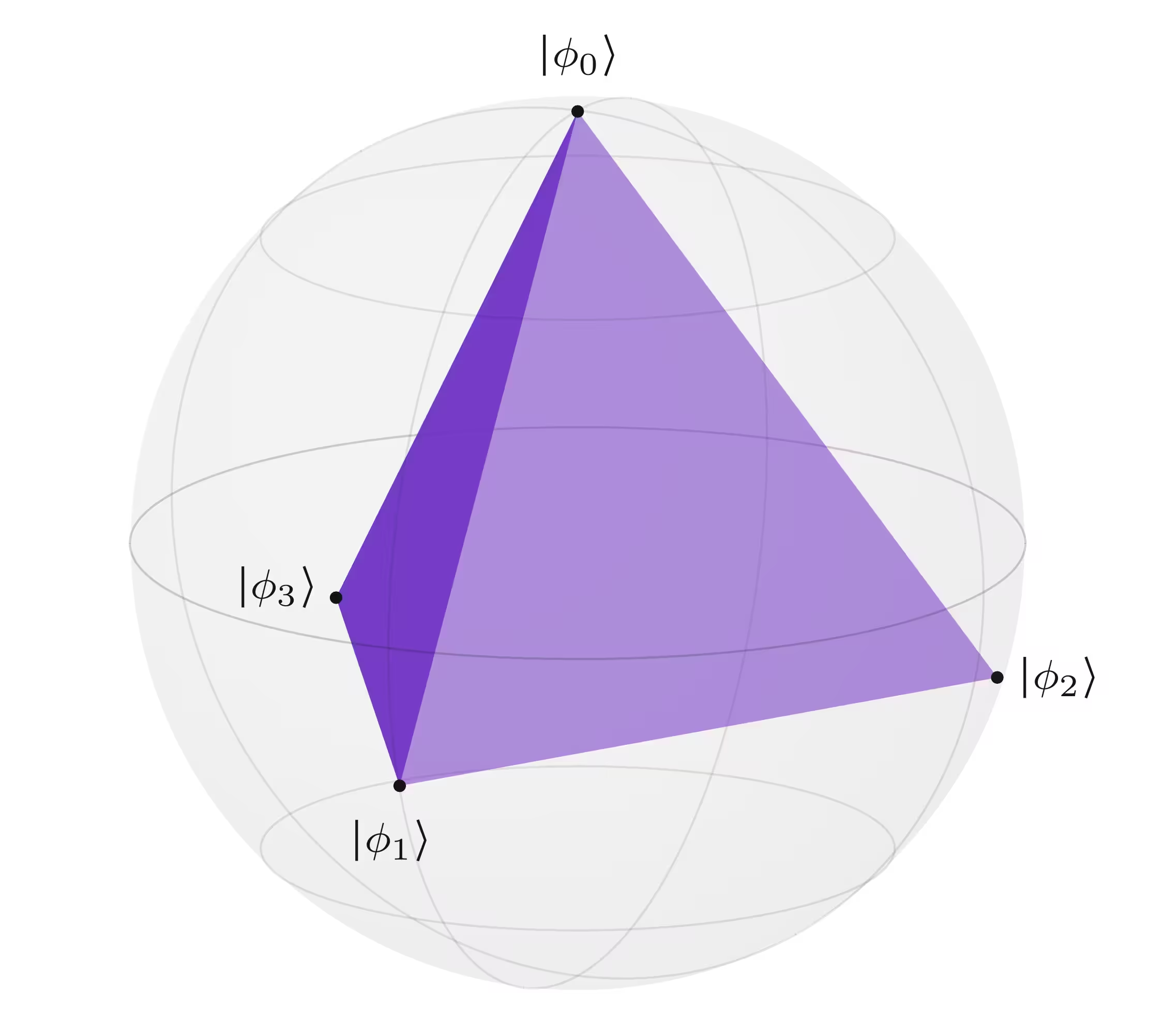
Ang mga Cartesian na koordinado ng apat na estadong ito sa Bloch sphere ay
na maaaring mapatunayan sa pamamagitan ng pagpapahayag ng mga representasyong density matrix ng mga estadong ito bilang mga linear na kumbinasyon ng mga Pauli matrix.
Ang apat na estadong ito ay perpektong nakakalat sa Bloch sphere, ang bawat isa ay pantay na distansya mula sa iba pang tatlo at ang mga anggulo sa pagitan ng anumang dalawa sa kanila ay palaging pareho.
Ngayon tukuyin natin ang isang sukat na ng isang qubit sa pamamagitan ng pagtatakda ng tulad ng sumusunod para sa bawat .
Maaari nating patunayan na ito ay isang wastong sukat tulad ng sumusunod.
-
Ang bawat ay maliwanag na positive semidefinite, dahil ito ay isang pure state na hinati ng isang-kalahati. Ibig sabihin, ang bawat isa ay isang Hermitian na matris at may isang eigenvalue na katumbas ng at lahat ng iba pang eigenvalue ay zero.
-
Ang kabuuan ng mga matris na ito ay ang identity matrix: Ang mga pagpapahayag ng mga matris na ito bilang mga linear na kumbinasyon ng mga Pauli matrix ay ginagawang diretso ang pagtunay nito.
Mga sukat bilang mga channel
Ang ikalawang paraan upang ilarawan ang mga sukat sa matematikal na termino ay bilang mga channel.
Ang klasikal na impormasyon ay maaaring tingnan bilang isang espesyal na kaso ng quantum na impormasyon, sa lawak na maaari nating tukuyin ang mga probabilistikong estado sa mga diagonal na density matrix. Kaya, sa operasyonal na termino, maaari nating isipin ang mga sukat bilang mga channel na ang mga input ay mga matris na naglalarawan ng mga estado ng anumang sistema na sinusukat at ang mga output ay mga diagonal na density matrix na naglalarawan ng nagreresultang distribusyon ng mga resulta ng sukat.
Makikita natin sa lalong madaling panahon na ang anumang channel na may katangiang ito ay palaging maaaring isulat sa isang simple, canonical na anyo na direktang nauugnay sa paglalarawan ng mga sukat bilang mga koleksyon ng mga positive semidefinite na matris. Sa kabaligtaran, kung may ibinigay na arbitrary na sukat bilang isang koleksyon ng mga matris, palaging may wastong channel na may katangiang diagonal output na naglalarawan sa ibinigay na sukat tulad ng iminungkahi sa nakaraang talata. Pinagsama-sama ang mga obserbasyon na ito, natuklasan natin na ang dalawang paglalarawan ng mga pangkalahatang sukat ay katumbas.
Bago magpatuloy, maging mas tiyak tayo tungkol sa sukat, kung paano natin ito tinitingnan bilang isang channel, at kung anong mga pagpapalagay ang ating ginagawa.
Gaya ng dati, ipagpalagay natin na ang ay ang sistema na susukatin, at ang mga posibleng resulta ng sukat ay mga integer na para sa ilang positibong integer na . Hayaan nating ang ang sistema na nag-iimbak ng mga resulta ng sukat, kaya ang klasikal na set ng estado nito ay , at kinakatawan natin ang sukat bilang isang channel na pinangalanang mula sa patungong . Ang ating pagpapalagay ay ang ay klasikal — ibig sabihin, anuman ang estadong sinimulan natin para sa , ang estado ng na ating nakuha ay kinakatawan ng isang diagonal na density matrix.
Maaari nating ipahayag sa matematikal na termino na ang output ng ay palaging diagonal sa sumusunod na paraan. Una, tukuyin ang completely dephasing channel na sa .
Ang channel na ito ay katulad ng completely dephasing qubit channel na mula sa nakaraang aralin. Bilang isang linear na mapping, ito ay nagtatanggal ng lahat ng off-diagonal na entry ng isang input matrix at iniiwanan ang diagonal.
At ngayon, isang simpleng paraan upang ipahayag na ang isang ibinigay na density matrix na ay diagonal ay sa pamamagitan ng equation na . Sa salita, ang pagtatanggal ng lahat ng off-diagonal na entry ng isang density matrix ay walang epekto kung at kung lamang ang mga off-diagonal na entry ay zero na sa simula pa lang. Ang channel na ay samakatuwid ay nakakatugon sa ating pagpapalagay — na ang ay klasikal — kung at kung lamang
para sa bawat density matrix na na kumakatawan sa isang estado ng .
Katumbasan ng mga pormulasyon
Mula sa mga channel patungong mga matris
Ipagpalagay na mayroon tayong isang channel mula sa patungong na may katangian na
para sa bawat density matrix na . Maaari rin itong ipahayag tulad ng sumusunod.
Gaya ng lahat ng channel, maaari nating ipahayag ang sa Kraus form para sa ilang paraan ng pagpili ng mga Kraus matrix .
Nagbibigay ito sa atin ng alternatibong expression para sa mga diagonal na entry ng
para sa
Kaya, para sa mga parehong matris na maaari nating ipahayag ang channel na tulad ng sumusunod.
Ang expression na ito ay naaayon sa ating paglalarawan ng mga pangkalahatang sukat sa mga tuntunin ng mga matris, habang nakikita natin ang bawat resulta ng sukat na lumalabas nang may probabilidad na .
Ngayon ay obserbahan natin na ang dalawang katangian na kinakailangan ng koleksyon ng mga matris na para mailarawan ang isang pangkalahatang sukat ay talagang natutupad. Ang unang katangian ay ang lahat ng ito ay mga positive semidefinite na matris. Isang paraan upang makita ito ay ang pag-obserba na, para sa bawat vector na na may mga entry na naaayon sa klasikal na estado ng mayroon tayong
Ang ikalawang katangian ay kung i-sum natin ang mga matris na ito makukuha natin ang identity matrix.
Ang huling pagkakapantay ay sumusunod sa katotohanang ang ay isang channel, kaya ang mga Kraus matrix nito ay dapat matupad ang kondisyong ito.
Mula sa mga matris patungong mga channel
Ngayon patunayan natin na para sa anumang koleksyon na ng mga positive semidefinite na matris na nakakatugon sa , ang mapping na tinukoy ng
ay katotohanan na isang wastong channel mula sa patungong .
Isang paraan upang gawin ito ay ang pag-compute ng Choi representation ng mapping na ito.
Ang transpose ng bawat ay ipinakilala para sa ikatlong pagkakapantay dahil
Ito ay nagpapahintulot na lumabas ang mga expression na at , na nagpapasimple sa identity matrix kapag sinu-sum sa at , ayon sa pagkakasunod.
Sa pamamagitan ng pagpapalagay na ang ay positive semidefinite, gayon din ang . Partikular, ang pag-transpose ng isang Hermitian na matris ay nagresulta sa isa pang Hermitian na matris, at ang mga eigenvalue ng anumang square matrix at ng transpose nito ay palaging nagtatugma. Sumusunod na ang ay positive semidefinite. Ang pag-trace out ng output system na (ang sistema sa kanan) ay nagbubunga ng
at kaya naman napagpasyahan natin na ang ay isang channel.
Mga bahagyang sukat
Ipagpalagay na mayroon tayong maraming sistema na magkasamang nasa isang quantum na estado, at ang isang pangkalahatang sukat ay ginagawa sa isa sa mga sistema. Nagdudulot ito ng isa sa mga resulta ng sukat, pinili nang random ayon sa mga probabilidad na tinutukoy ng sukat at ng estado ng sistema bago ang sukat. Ang nagreresultang estado ng mga natitirang sistema ay, sa pangkalahatan, ay depende sa kung aling resulta ng sukat ang nakuha.
Suriin natin kung paano ito gumagana para sa isang pares ng mga sistema kapag ang sistema ay sinukat. (Pinangalanan natin ang sistema sa kanan na dahil kukunin natin ang bilang isang sistema na kumakatawan sa klasikal na output ng sukat kapag tiningnan natin ito bilang isang channel.) Maaari nating madaling i-generalize ito sa sitwasyon kung saan ang mga sistema ay naka-swap pati na rin sa tatlo o higit pang sistema.
Ipagpalagay na ang estado ng bago ang sukat ay inilarawan ng isang density matrix na , na maaari nating isulat tulad ng sumusunod.
Sa expression na ito ipinapagpalagay natin na ang mga klasikal na estado ng ay .
Ipagpalagay natin na ang sukat mismo ay inilarawan ng koleksyon ng mga matris . Ang sukat na ito ay maaari ring ilarawan bilang isang channel na mula sa patungong , kung saan ang ay isang bagong sistema na may klasikal na set ng estado na . Partikular, ang aksyon ng channel na ito ay maaaring ipahayag tulad ng sumusunod.
Mga probabilidad ng resulta
Isinasaalang-alang natin ang isang sukat ng sistema , kaya ang mga probabilidad kung saan nakukuha ang iba't ibang resulta ng sukat ay maaaring depende lamang sa , ang reduced na estado ng . Partikular, ang probabilidad para sa bawat resulta na na lumabas ay maaaring ipahayag sa tatlong katumbas na paraan.
Ang unang expression ay natural na kumakatawan sa probabilidad na makuha ang resulta na batay sa kung ano na ang alam natin tungkol sa mga sukat ng isang sistema. Para makuha ang ikalawang expression, ginagamit natin lamang ang kahulugan na .
Para makuha ang ikatlong expression ay nangangailangan ng mas malalim na pag-iisip — at hinihikayat ang mga mag-aaral na kumbinsihin ang kanilang sarili na ito ay totoo. Narito ang isang pahiwatig: Ang katumbasan sa pagitan ng ikalawa at ikatlong expression ay hindi depende sa na isang density matrix o sa bawat na positive semidefinite. Subukang ipakita ito muna para sa mga tensor product na may anyo at pagkatapos ay tapusin na ito ay totoo sa pangkalahatan sa pamamagitan ng linearity.
Kahit hindi agad na malinaw ang katumbasan ng una at ikatlong expression sa nakaraang equation, ito ay may katuturan. Simula sa isang sukat sa , epektibo tayong nagtatakda ng isang sukat ng , kung saan itinapon lang natin ang at sinusukat ang . Gaya ng lahat ng sukat, ang bagong sukat na ito ay maaaring ilarawan ng isang koleksyon ng mga matris, at hindi nakakagulat na ang sukat na ito ay inilarawan ng koleksyon
Mga estado na nakondisyon sa mga resulta ng sukat
Kung gusto nating matukoy hindi lamang ang mga probabilidad para sa iba't ibang resulta kundi pati na rin ang nagreresultang estado ng na nakondisyon sa bawat resulta ng sukat, maaari tayong tumingin sa channel na paglalarawan ng sukat. Partikular, suriin natin ang estado na nakukuha natin kapag inilapat natin ang sa at walang ginagawa sa .
Tandaan na ito ay isang density matrix dahil sa katotohanang ang ay isang channel, kaya ang bawat matris na ay kinakailangang positive semidefinite.
Ang isang huling hakbang ay nag-transform ng expression na ito sa isa na nagpapakita ng hinahanap natin.
Ito ay isang halimbawa ng isang classical-quantum state,
gaya ng nakita natin sa aralin na Density matrices. Para sa bawat resulta ng sukat na , mayroon tayong may probabilidad na
na ang ay nasa klasikal na estado na at ang ay nasa estado na
Ibig sabihin, ito ang density matrix na nakukuha natin sa pamamagitan ng pag-normalize ng
sa pamamagitan ng paghati nito sa trace nito. (Sa pormal na pagsasalita, ang estado na ay tinukoy lamang kapag ang probabilidad na ay hindi zero; kapag ang ang estadong ito ay walang kaugnayan, dahil tumutukoy ito sa isang discrete na pangyayari na nangyayari nang may probabilidad na zero.)
Natural na, ang mga probabilidad ng resulta ay naaayon sa ating mga nakaraang obserbasyon.
Sa buod, ito ang nangyayari kapag ang sukat na ay ginagawa sa kapag ang ay nasa estado na .
-
Ang bawat resulta na ay lumilitaw nang may probabilidad na .
-
Nakondisyon sa pagkuha ng resulta na , ang estado ng ay kinakatawan ng density matrix na na ipinapakita sa equation na , na nakukuha sa pamamagitan ng pag-normalize ng .
Generalisasyon
Maaari nating iakma ang paglalarawang ito sa ibang mga sitwasyon, tulad ng kapag ang pagkakasunod ng mga sistema ay binaliktad o kapag mayroong tatlo o higit pang mga sistema. Konseptwal ito ay diretso, kahit maaaring maging mabigat ang pagsulat ng mga formula.
Sa pangkalahatan, kung mayroon tayong na mga sistema , ang estado ng compound system na ay , at ang sukat na ay ginagawa sa , ang sumusunod ay nangyayari.
-
Ang bawat resulta na ay lumilitaw nang may probabilidad na
-
Nakondisyon sa pagkuha ng resulta na , ang estado ng ay kinakatawan ng sumusunod na density matrix.